
You do not automatically need a new fuse box every time you add a circuit, but your existing consumer unit and electrical installation must be suitable for the new work. Before installing anything from a new kitchen circuit to an outdoor supply, an electrician should assess the existing protection, capacity and condition of the installation.
For homes and businesses in Horley, Reigate, Redhill, Crawley and across Surrey and West Sussex, this is particularly important where older electrical installations are being adapted for modern equipment. This guide covers:
- What your fuse box actually does
- When an existing consumer unit can be kept
- When an upgrade may be needed
- Why RCD and RCBO protection matters
- Whether an old fuse box is automatically unsafe
- How the electrician checks capacity
- What installation involves
- Common mistakes to avoid
- How to plan for future electrical upgrades
- What to do next
What does your fuse box actually do?
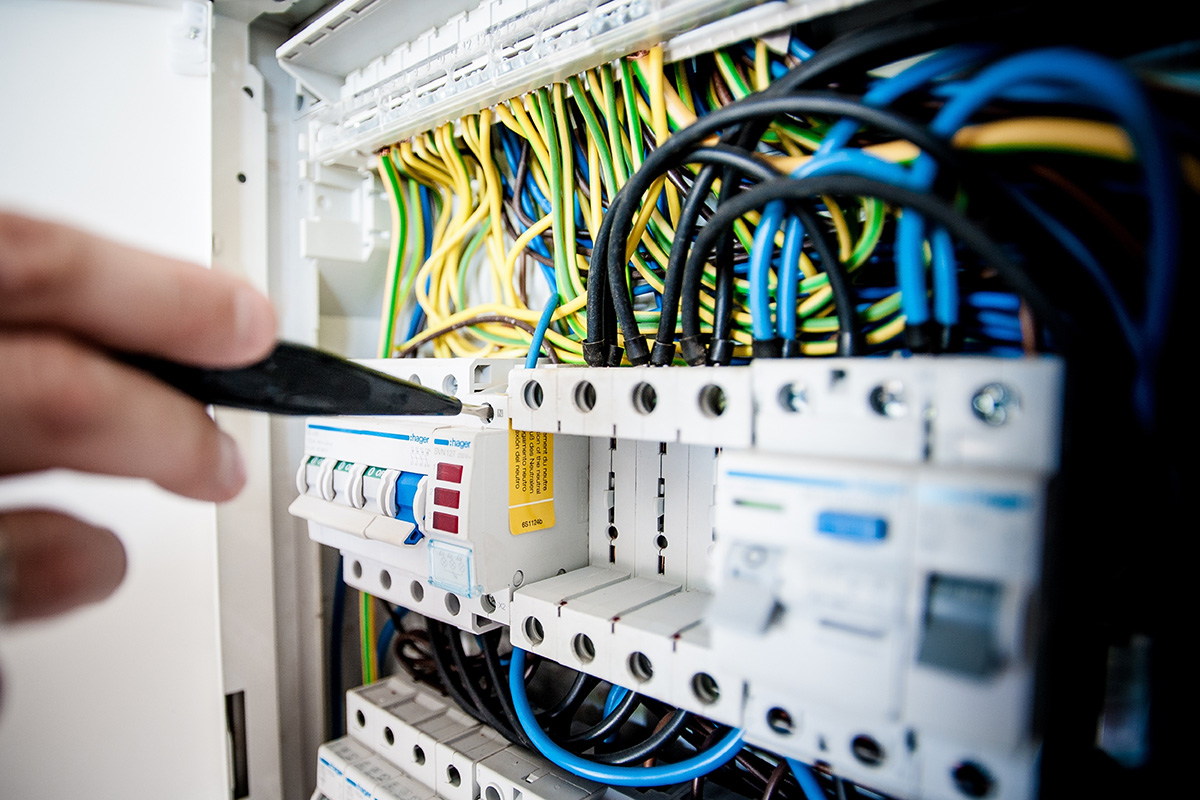
Your fuse box, more accurately called a consumer unit in a modern installation, distributes electricity around the property and contains protective devices for your electrical circuits.
These devices are designed to disconnect the electricity when certain electrical faults occur. Depending on the design and age of the installation, the consumer unit may contain traditional fuses, circuit breakers, RCDs or individual RCBOs.
An RCBO combines protection against certain electrical faults and overloads for an individual circuit. Modern designs often use these to give circuits separate protection rather than allowing one fault to switch off several areas of the property.
Can a new circuit be connected to an existing consumer unit?
Yes, in some properties a new circuit can be added safely without replacing the complete consumer unit.
The electrician needs to determine whether the existing equipment is suitable for the proposed work and whether the new circuit can comply with current requirements.
Factors that may need checking include:
- Available space within the consumer unit
- Type and condition of the protective devices
- Required RCD protection
- Earthing and bonding arrangements
- Condition of the existing installation
- Electrical demand and supply capacity
- Compatibility of new protective devices with the existing equipment
There is therefore no sensible rule that says every new circuit requires a complete consumer unit replacement.
When might a consumer unit upgrade be needed?
A replacement may become appropriate where the existing board cannot safely or practically accommodate the proposed electrical work.
This is commonly considered when a property has a significantly older fuse box, insufficient ways for additional circuits, unsuitable protective devices or defects that need correcting.
A new consumer unit may also make sense when substantial electrical work is planned and the existing arrangement would otherwise limit the installation.
JPEC Electrical can assess the complete installation before recommending an upgrade, rather than replacing equipment unnecessarily.
Why does RCD protection matter?
RCD protection is an important part of modern electrical safety. An RCD, or residual current device, is designed to disconnect the electricity quickly when certain types of leakage current are detected.
Current wiring requirements call for RCD protection in many situations within domestic installations, including many socket circuits and cables installed within walls.
That becomes particularly relevant when you add new wiring to an older installation. The existing circuit arrangements may have been acceptable when originally installed but may not provide the protection required for the new work.
An electrician must design the addition so that the new installation work complies with the appropriate requirements.
Is an old fuse box automatically dangerous?
No. The age or appearance of a fuse box alone does not prove that an installation is dangerous.
Electrical regulations change over time, which means many existing installations do not include every feature that would be expected on a completely new installation today.
That does not mean every older installation needs to be stripped out immediately.
However, age can be a reason to investigate further. Signs of deterioration, damage, overheating, inadequate protection or unsuitable alterations should not be ignored.
The correct approach is to inspect and test where necessary, then make recommendations based on the actual condition of the installation.
What electrical upgrades commonly need new circuits?
Modern properties can place very different demands on an electrical installation compared with when it was originally designed.
Depending on the equipment and property, dedicated circuits may be needed for things such as:
- Electric showers
- Ovens and cooking appliances
- Garden rooms and outbuildings
- Air conditioning equipment
- Electric heating
- Workshop equipment
- Large kitchen appliances or alterations
- Some renewable energy and EV charging installations
The correct circuit design depends on the equipment being connected, cable route, installation method, protective devices and the characteristics of the existing electrical supply.
How does an electrician check whether your installation has enough capacity?
Adding circuits is not simply a question of finding an empty space inside the consumer unit. The electrician also needs to consider the electrical demand on the installation.
A typical home does not normally operate every appliance at maximum output simultaneously. Electrical design therefore considers the expected pattern of use as well as the connected equipment.
For example, a family home in Reigate adding electric cooking and air conditioning may have a different usage profile from a small business in Crawley where electrical equipment operates throughout the working day.
The property’s supply arrangement and proposed loads should therefore be assessed rather than guessed.
Do you have to upgrade all the old wiring when changing a consumer unit?
Not necessarily. Replacing a consumer unit does not automatically mean every existing cable in the property has to be replaced simply because it was installed under an older edition of the Wiring Regulations.
However, existing circuits need to be assessed before they are reconnected. Dangerous or potentially dangerous defects cannot simply be ignored and connected back into a new board.
This is one reason testing before and during a consumer unit replacement matters. A shiny new board does not correct damaged wiring, poor connections or unsuitable electrical alterations elsewhere in the property.
JPEC Electrical can test the relevant installation, explain any defects and identify what genuinely needs correcting.
What does a consumer unit replacement involve?
A consumer unit replacement involves more than removing one box and fitting another. The electricity supply will need to be isolated while work is completed, and the connected circuits must be appropriately inspected and tested.
The installer will normally label the circuits and carry out electrical testing before the installation is put back into service. Appropriate certification should then be provided.
How long the job takes depends on the number of circuits, the condition of the existing wiring and whether defects are discovered during testing.
If problems are likely, discussing them before installation helps you understand the possible disruption and additional work.
What are the common mistakes to avoid?
The biggest mistake is treating the consumer unit as an isolated product rather than part of a complete electrical installation.
Simply fitting a modern board cannot compensate for unsafe wiring elsewhere.
Other mistakes include:
- Adding circuits without properly checking the existing installation
- Assuming an unused space in the board means capacity is available
- Ignoring earthing and bonding
- Using incompatible protective devices
- Failing to test the completed work properly
- Choosing a board with no room for likely future additions
Electrical alterations should be designed around the property and intended load, not simply around whichever equipment is easiest to install.
Should you allow spare capacity for future upgrades?
Where practical, yes. If you are already replacing a consumer unit, it is sensible to consider what electrical equipment you may add over the coming years.
You might currently only be renovating a kitchen but later want air conditioning, a garden office, an EV charger, solar panels, battery storage or additional electric heating.
You do not need to install circuits for equipment you may never buy, but allowing suitable space and considering likely future requirements can make later upgrades simpler.
This is especially useful during major renovations when access to cables and electrical equipment is easier.
Do electrical alterations need certification?
Electrical installation work should be properly designed, installed, inspected and tested, with the appropriate electrical certification provided for the type of work completed.
Some domestic electrical work is also notifiable under the Building Regulations in England, depending on exactly what work is being carried out and where.
A competent electrical contractor can explain what certification and notification apply before starting the job.
For customers across Horley, Redhill, Reigate, Crawley, Surrey and West Sussex, JPEC Electrical can survey, design, install, test and commission electrical upgrades while explaining the process in straightforward terms.
What should you do before adding a new circuit?
Start with the equipment you actually want to install rather than deciding in advance that you need a new fuse box.
An electrician can then assess the existing consumer unit, supply, earthing arrangements, circuit protection and proposed electrical load.
From there, you can be advised whether the existing board can be retained, modified appropriately or should be replaced.
This avoids unnecessary upgrades while making sure the new work is designed properly.
JPEC Electrical can help
If you are planning new electrical circuits, a renovation or an upgrade to your existing installation, JPEC Electrical can assess what is already there before recommending the right solution.
We can survey, design, install, inspect, test and commission electrical work for homes, landlords and businesses throughout Horley, Reigate, Redhill, Crawley, Surrey and West Sussex.
Whether your existing consumer unit can stay or needs upgrading depends on the installation and the work you are planning. We can explain those trade-offs clearly and provide a proper quotation based on your property.
This article provides general information and is not specific electrical advice for your property. Electrical installations, supply arrangements and proposed loads vary. Any recommendation should be confirmed following an appropriate site survey, design and testing by a suitably qualified electrical contractor.