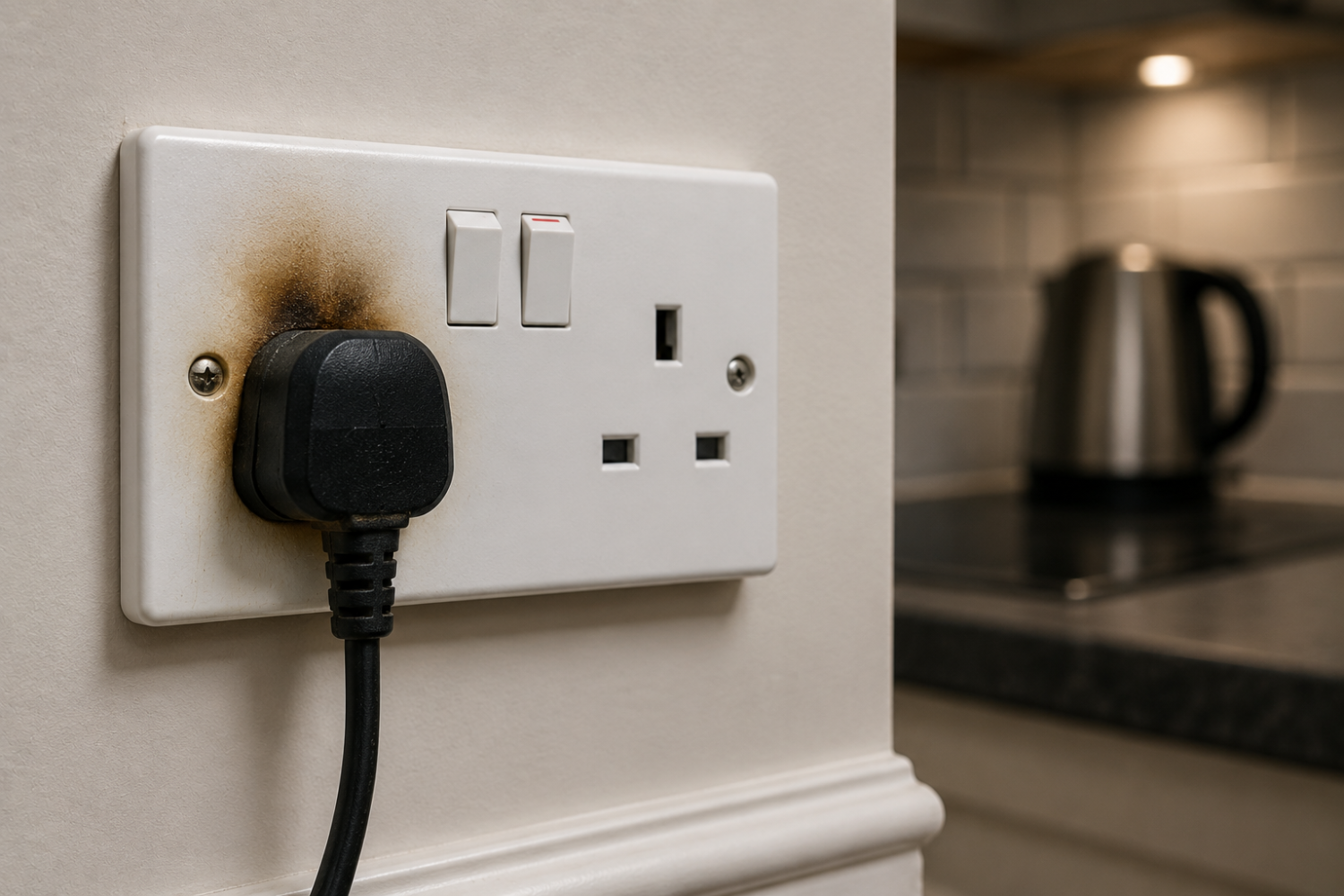
A plug socket should not become noticeably hot during normal use. Slight warmth from some plugs or power supplies can occur when equipment is operating, but a socket that feels unusually hot, smells of burning, looks discoloured or makes buzzing or crackling noises should not be ignored. The cause could be an overloaded connection, damaged accessory, loose electrical connection, faulty appliance or another problem that needs investigation.
If you have noticed a warm or hot socket in your home or business in Horley, Reigate, Redhill, Crawley, Surrey or West Sussex, this guide explains:
- Whether a plug socket should ever feel warm
- Why sockets can overheat
- How appliances and extension leads can contribute
- Why loose connections can be dangerous
- What scorch marks and burning smells can mean
- Whether the socket simply needs replacing
- When the wiring may need checking
- What an electrician will investigate
- Whether one hot socket means you need a rewire
- How to reduce the risk of the problem returning
Should a plug socket ever feel warm?
The socket itself should not normally become noticeably hot during everyday use.
Some electrical equipment, chargers and power supplies naturally generate heat while operating, so warmth around the plug does not automatically prove that the fixed electrical installation is faulty.
However, there is an important difference between a mildly warm appliance plug and a socket faceplate that is becoming unusually hot.
If the socket is hot to touch, getting progressively warmer or showing other warning signs, stop using it where it is safe to do so and arrange for the cause to be investigated.
Why can an electrical socket overheat?
Heat can develop for several reasons, which is why simply replacing the visible socket is not always enough.
Possible causes include:
- a loose electrical connection
- a damaged or worn socket
- a faulty plug
- a problem with the connected appliance
- poor contact between the plug and socket
- excessive electrical load
- damaged wiring
- poor-quality previous electrical work
An electrician needs to establish where the heat is actually being generated and why.
The fault may be confined to the socket itself, or it may require further investigation of the connected circuit or equipment.
Can a loose connection make a socket hot?
Yes. Loose or deteriorated electrical connections can generate heat.
Electrical connections need to provide a reliable low-resistance path for current. If a connection becomes poor, localised heating can develop when electricity flows through it.
In some cases this can lead to discolouration, melting or damage to the accessory and surrounding components.
This is one reason a socket that repeatedly becomes hot should not simply be left until it stops working completely.
Finding the cause requires appropriate electrical isolation, inspection and testing by a competent electrician.
Can plugging in a powerful appliance make a socket hot?
High-powered electrical appliances place greater demand on a circuit than small devices such as phone chargers or lamps.
Equipment such as portable heaters, tumble dryers, kettles and some kitchen appliances can draw relatively high current while operating.
A correctly designed and healthy electrical installation should be able to supply equipment within its intended ratings, but existing defects can become more noticeable when a larger load is connected.
For example, a deteriorated connection may appear normal when supplying a small lamp but begin heating when a higher-powered appliance is used.
This does not automatically mean the appliance itself is responsible. The complete situation needs to be assessed.
Can extension leads and adaptors cause overheating?
They can contribute if they are overloaded, damaged or used incorrectly.
An extension lead does not increase the amount of electricity that a wall socket can safely supply. It simply allows several pieces of equipment to connect to the same supply point.
Problems can occur when several high-powered appliances are connected through one extension lead or adaptor.
Cable reels can also require particular care. Their safe current-carrying capability may be lower when the cable remains wound on the reel because heat cannot dissipate as effectively.
Electrical Safety First advises against overloading sockets and recommends checking plugs and sockets for overheating, burn marks, buzzing or crackling sounds.
What do brown marks or scorching around a socket mean?
Brown marks, blackening, melting or other heat damage should be taken seriously.
They can indicate that excessive heat or electrical arcing has occurred.
Arcing happens when electrical current crosses a gap or poor connection rather than travelling through the intended secure connection. It can generate significant localised heat.
Do not continue using a visibly burnt or melted socket simply because it still provides power.
The accessory and associated wiring should be checked to establish the extent and cause of the damage before it is returned to normal use.
What if I can smell burning near a socket?
A burning or hot-plastic smell around electrical equipment is a warning sign that needs prompt attention.
Where it is safe to do so, stop using the affected socket or equipment.
If there is visible smoke, fire or immediate danger, leave the area and contact the emergency services as appropriate.
Do not dismantle the socket to look behind it yourself.
The absence of visible damage on the front does not mean that everything behind the faceplate is safe. Electrical connections and cable damage may be concealed inside the wall or mounting box.
Why does my plug feel hot but the socket does not?
The connected equipment may also be relevant.
A problem with a plug, fuse, cable or appliance can generate heat around the plug itself.
Some electronic power supplies also become warm during normal operation, but excessive heat, burning smells, deformation or discolouration should not be treated as normal.
If the problem appears to follow one particular appliance between different sockets, stop using that equipment and arrange appropriate inspection or repair.
If several appliances cause the same wall socket to become hot, the fixed installation may require investigation.
Can an old socket simply wear out?
Yes. Electrical accessories do not last indefinitely.
Repeatedly inserting and removing plugs can eventually wear internal contacts. Accessories can also be damaged by impact, heat, moisture, poor connections or previous alterations.
A plug that feels unusually loose in a socket may indicate wear or damage.
However, replacing an old accessory should not become a shortcut for ignoring heat damage.
If overheating has occurred, the electrician should assess the condition of the conductors and connections as well as the socket itself.
Does a hot socket mean my house needs rewiring?
No. One overheating socket does not automatically mean your entire property requires rewiring.
The problem may be localised to an accessory or connection.
However, further investigation may identify wider issues, particularly in an older electrical installation, a property with previous DIY alterations or a home experiencing several electrical problems at once.
For example, one damaged socket in a relatively modern property in Horley may require a straightforward repair. An older property in Reigate with overheating accessories, deteriorated wiring, repeated tripping and other defects may require a wider electrical assessment.
The recommendation should be based on inspection and testing rather than assumption.
What if several sockets are getting warm?
If several sockets are affected, the electrician may need to investigate beyond an individual accessory.
It is useful to note which sockets are involved and what equipment was operating when you noticed the problem.
Several affected points could indicate an issue associated with the circuit, connected loads or wider installation.
Do not remove multiple socket fronts or attempt to tighten connections yourself.
Fixed electrical wiring can remain dangerous unless the correct circuit has been isolated and the absence of voltage has been properly confirmed.
Can the consumer unit prevent a socket from overheating?
The protective devices in a consumer unit provide important electrical safety functions, but they cannot be relied upon to prevent every form of localised overheating.
Circuit breakers and fuses primarily protect against excessive current under particular fault and overload conditions.
RCDs and RCBOs provide additional protection against certain electrical faults, including protection intended to reduce electric-shock risk.
A poor electrical connection can potentially generate localised heat without behaving in exactly the same way as a conventional overload.
This is why physical warning signs such as heat, burning smells and discolouration still need investigation even if no protective device has tripped.
What will an electrician check?
The investigation will depend on the symptoms and condition of the installation.
An electrician may assess:
- the socket outlet
- the plug and connected equipment
- electrical connections
- the condition of the conductors
- signs of heat or arcing
- the relevant electrical circuit
- protective devices
- earthing arrangements
- evidence of overloading
- previous alterations or damage
Electrical testing may then be required to determine whether the fault is isolated or whether further remedial work is needed.
Will the electrician just replace the socket?
Sometimes replacing the accessory will form part of the repair, but the underlying cause should be understood first.
If a socket has been damaged because of a loose connection, simply fitting a new faceplate without checking the conductors and terminations would not properly address the issue.
The electrician should inspect the affected parts of the installation, repair any defects and confirm that the circuit is suitable to return to service.
Where heat has damaged the cable, mounting box or surrounding equipment, additional remedial work may be required.
What electrical standards apply to socket repairs?
Electrical installation work should comply with the applicable requirements of BS 7671, commonly known as the IET Wiring Regulations.
As of September 2026, BS 7671:2018+A4:2026 has been published. The previous Amendment 3:2024 edition remains within its formal transition period until 15 October 2026, after which Amendment 4 becomes the applicable edition.
BS 7671 is the national standard for electrical installations in the UK. It provides the technical framework for the design, installation, inspection and testing of electrical installations.
It is important to distinguish this technical standard from legislation. Depending on the property and work being completed, legal requirements such as the Building Regulations may also apply.
How can I reduce the risk of sockets overheating?
Good electrical habits can help reduce avoidable problems.
- Do not overload extension leads or adaptors.
- Replace visibly damaged plugs and leads.
- Do not ignore loose-fitting plugs or damaged sockets.
- Keep electrical equipment away from water unless designed for the location.
- Do not continue using accessories showing burn marks or melting.
- Have repeated electrical faults professionally investigated.
Most importantly, do not assume that a socket is safe simply because it continues to work.
Heat, burning smells, crackling and visible damage are all reasons to stop and investigate rather than wait for complete failure.
JPEC Electrical can help
If a plug socket is becoming hot, discoloured, damaged or making unusual noises, JPEC Electrical can investigate the cause and advise on the appropriate repair.
We provide electrical fault-finding, inspection, testing and remedial work for homeowners, landlords, property managers and businesses across Horley, Reigate, Redhill, Crawley, Surrey and West Sussex.
Our electricians can assess the affected accessory and associated electrical installation, identify defects and explain whether the problem requires a localised repair or wider electrical work.
Where installation work is completed, JPEC Electrical can carry out the appropriate inspection, testing and certification.
To arrange an electrical inspection or fault-finding visit, contact JPEC Electrical.
This article provides general information and is not personal electrical advice. Electrical overheating can present a risk of fire or electric shock. Do not dismantle sockets, consumer units or other fixed electrical equipment to investigate a fault yourself. Recommendations should be confirmed through appropriate inspection and testing by a suitably competent electrician.