
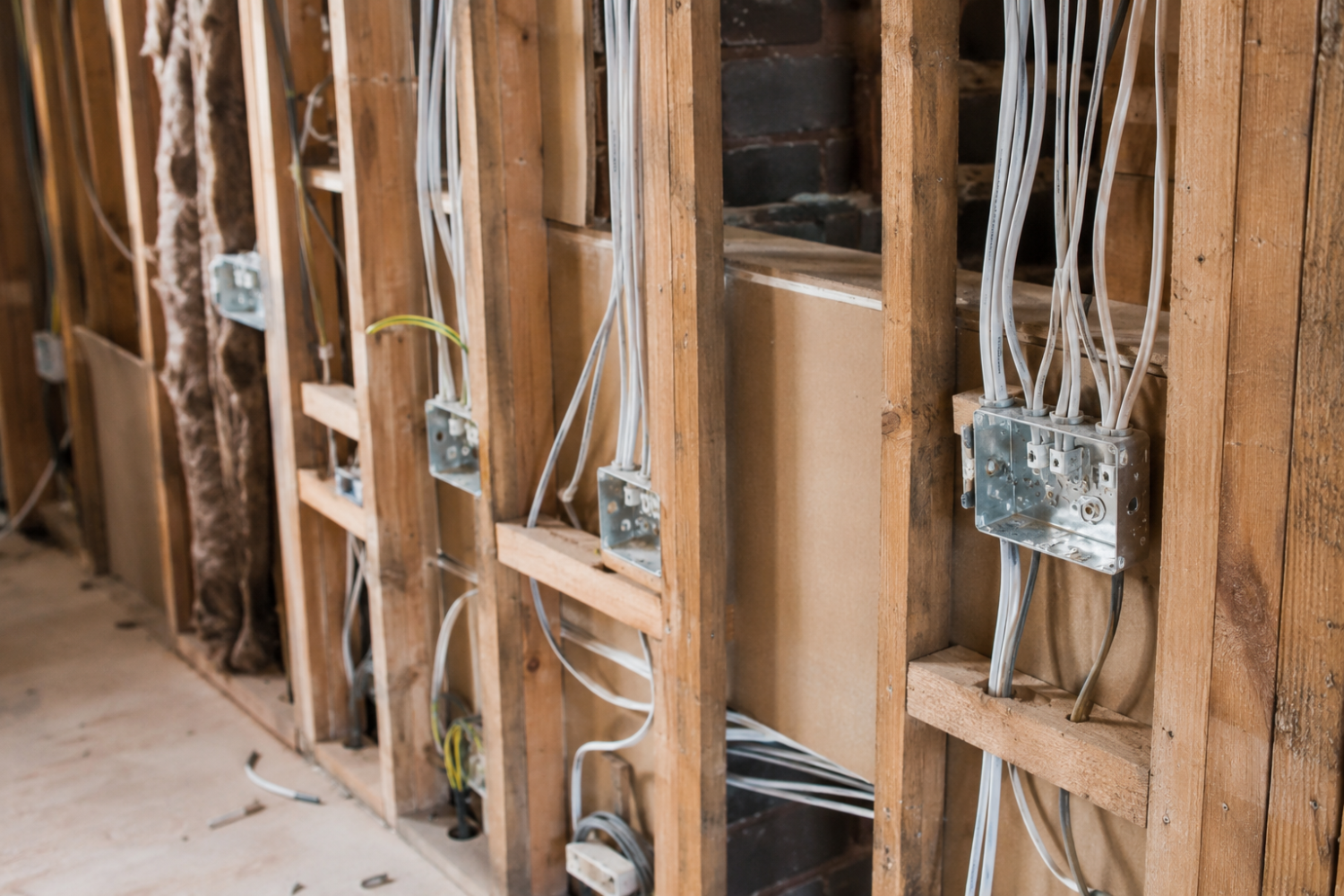
You may need to have your house rewired if the electrical installation is old, damaged, unsafe or no longer suitable for the amount of electricity your household uses.
However, an older property does not automatically require a complete rewire. The condition of the cables, consumer unit, sockets, switches, earthing and protective devices must be properly inspected and tested before a recommendation can be made.
For homeowners, landlords and property developers in Horley, Reigate, Redhill, Crawley, Surrey, West Sussex, Kent and the wider South East, arranging an electrical inspection can help establish whether the property requires a full rewire, partial rewiring or smaller electrical upgrades.
This guide explains:
- The common signs that a house may need rewiring
- Whether old wiring is automatically unsafe
- How an electrician checks the condition of your wiring
- The difference between a full and partial rewire
- When to rewire during a renovation
- Whether you need a new consumer unit
- How long a house rewire may take
- What electrical certification you should receive
- How JPEC Electrical can help
What is a house rewire?
A house rewire involves replacing old, damaged or unsuitable fixed electrical wiring with a newly designed electrical installation.
Depending on the property and the condition of the existing electrics, this may include replacing or upgrading:
- Electrical cables
- Socket circuits
- Lighting circuits
- Switches and socket outlets
- The consumer unit or fuse box
- Earthing and bonding arrangements
- Smoke and heat alarm supplies
- Bathroom and kitchen circuits
- Outdoor electrical supplies
- Electric heating circuits
- Supplies for appliances and high-demand equipment
A properly planned rewire should not simply replace old cables in their existing positions. It is also an opportunity to design the electrical installation around how the property is used today.
Modern households commonly require significantly more socket outlets, dedicated appliance circuits and electrical capacity than properties needed when they were originally built.
A homeowner in Reigate, for example, may need additional circuits for an induction hob, electric shower, home office, garden room, air conditioning or electric heating. A property in Crawley may also need provision for an EV charger, solar panels or battery storage.
Planning these requirements before rewiring begins can help avoid unnecessary alterations later.
What are the signs that my house may need rewiring?
There is no single sign that proves a property requires a complete rewire. However, certain warning signs suggest that the electrical installation should be inspected by a qualified electrician.
These can include:
- Frequently tripping circuits
- Blown fuses
- Flickering or dimming lights
- Buzzing or crackling sounds from switches or sockets
- Warm or discoloured socket outlets
- Burning smells near electrical accessories
- Damaged, brittle or exposed cables
- Electric shocks or tingling sensations from appliances
- An old fuse box with rewireable fuses
- Very few socket outlets throughout the property
- Heavy reliance on extension leads
- No apparent RCD protection
- Previous DIY electrical alterations
- Unexplained electrical faults
- Wiring that has not been inspected for many years
Any smell of burning, visible scorching, sparking or repeated loss of power should be treated seriously. Stop using the affected circuit or appliance and contact a qualified electrician.
JPEC Electrical provides electrical fault-finding, inspection and rewiring services across Horley, Redhill, Reigate, Crawley and surrounding areas of Surrey and West Sussex.
Does an old house automatically need rewiring?
An old house does not automatically need rewiring.
The age of the building can provide useful context, but the condition and safety of its electrical installation are more important. A house may be old but have had its wiring replaced or upgraded correctly. Alternatively, a newer property may contain damaged wiring, poor-quality alterations or installation defects.
Electrical Safety First advises that the need for rewiring depends on the installation’s condition rather than age alone. A qualified electrician should inspect and test the installation before recommending a full rewire.
Older properties around Horley, Reigate, Redhill and other parts of Surrey may also have been extended or altered several times. The original property, loft conversion, extension, garage and garden buildings may all contain wiring installed at different times.
This can create a mixture of cable types, protective devices and installation standards. It does not necessarily mean the entire property is unsafe, but it makes a professional assessment especially important.
Does old-fashioned wiring mean that the property is unsafe?
Some older wiring materials and installation methods can indicate that an electrical system requires further investigation.
Examples may include:
- Rubber-insulated cables
- Fabric-covered wiring
- Lead-sheathed cables
- Rewireable fuse boards
- Damaged or brittle cable insulation
- Circuits without appropriate modern protection
- Poorly completed additions and alterations
- Limited or inadequate earthing arrangements
You should not remove socket outlets or open a consumer unit to identify wiring yourself. Electrical cables can remain live even when part of the installation appears to be switched off.
A qualified electrician can inspect accessible areas and carry out electrical testing to determine the installation’s actual condition.
How can I find out whether my house needs rewiring?
The safest way to find out whether a house needs rewiring is to arrange a professional electrical inspection.
An Electrical Installation Condition Report, commonly known as an EICR, assesses the condition of the fixed electrical installation. It can identify deterioration, damage, defects and safety concerns that may increase the risk of electric shock or electrical fire.
During an electrical inspection, the electrician may assess:
- The condition of the consumer unit
- The type and condition of the wiring
- Earthing and bonding
- Circuit protection
- RCD protection
- Socket and switch condition
- Signs of overloading
- Previous alterations
- Electrical equipment connected to the installation
- The suitability of circuits for continued use
The electrician will then explain whether the installation is satisfactory, whether remedial work is needed or whether a partial or complete rewire should be considered.
An EICR does not automatically result in a recommendation for a full rewire. In some properties, targeted remedial work may be enough to improve safety and bring the installation to an acceptable condition.
What is the difference between a full rewire and a partial rewire?
A full rewire generally involves replacing most or all of the fixed electrical wiring within a property.
A partial rewire involves replacing or altering only selected parts of the installation.
For example, partial rewiring might be appropriate where:
- An extension is being built
- A kitchen or bathroom is being renovated
- One circuit has deteriorated
- Part of the property has already been rewired
- An outbuilding requires a new supply
- Existing wiring remains suitable in some areas
- A new high-demand appliance requires a dedicated circuit
The correct approach must be based on inspection, testing and electrical design.
Replacing one visibly damaged cable may not solve the problem if similar wiring is installed throughout the property. Equally, replacing every cable may be unnecessary if testing confirms that large parts of the installation remain in a suitable condition.
JPEC Electrical can assess the property and explain whether a full rewire, partial rewire or programme of electrical remedial work would be most appropriate.
Should I rewire my house while renovating?
A major renovation is often the most practical time to rewire a house.
Rewiring normally requires access behind walls, beneath floors and above ceilings. If rooms are already being stripped, replastered or refurbished, the electrical work can be coordinated with the wider building project.
Rewiring before decorating may help reduce:
- Damage to finished walls
- Repeated lifting of floors
- Additional plastering
- Disruption after moving into the property
- The cost of completing similar work twice
Before a renovation begins, it is sensible to decide where you need:
- Standard socket outlets
- USB charging outlets
- Lighting controls
- Kitchen appliances
- Electric ovens and hobs
- Electric heating
- Smoke and heat alarms
- Outdoor lighting
- Security equipment
- Data and internet points
- Home-office supplies
- Air-conditioning equipment
- EV charging
- Solar PV and battery storage
For customers completing refurbishments in Surrey, Sussex or Kent, JPEC Group can provide coordinated electrical and wider building support under one company.
This helps ensure that cable routes, plastering, structural work, heating systems and future renewable technology are considered before finishes are completed.
Do I need a new consumer unit when rewiring?
A new consumer unit is commonly installed as part of a house rewire, although the requirement will depend on the condition and suitability of the existing equipment.
The consumer unit distributes electricity around the property and contains protective devices for the electrical circuits.
An electrician will consider:
- The age and condition of the existing consumer unit
- Whether it has enough capacity
- The available space for new circuits
- The type of protective devices installed
- Whether appropriate RCD protection is provided
- Whether surge protection is required or recommended
- The number and type of circuits in the new design
- Whether the property has or may later have renewable technology
Simply installing a new consumer unit does not replace the need to assess the rest of the wiring. A modern consumer unit connected to damaged or unsuitable circuits does not automatically make the entire electrical installation safe.
Testing should be completed before and during the work so that any existing problems can be identified.
Can I replace the sockets without rewiring the house?
It may be possible to replace sockets and switches without rewiring the entire property, but the condition of the wiring behind them must be considered.
New accessories can make an installation look modern while old or damaged cables remain hidden behind the walls.
Before completing a large cosmetic upgrade, an electrician may recommend testing the circuits first. This is particularly important when:
- The property has an old fuse box
- Socket outlets are damaged or discoloured
- There is a history of electrical faults
- You do not know when the wiring was last inspected
- The property has undergone previous DIY alterations
- You are buying or renovating an older home
Testing first can prevent money being spent on new accessories that later need to be removed during rewiring.
Will rewiring damage my walls and floors?
Rewiring can involve disruption because electricians need to route new cables throughout the property.
This may require:
- Lifting selected floorboards
- Accessing loft spaces
- Cutting channels into walls
- Removing certain accessories
- Drilling cable routes
- Moving furniture
- Temporarily isolating electrical supplies
The amount of disruption depends on the property’s construction, layout and current condition.
An empty property undergoing renovation is generally easier to rewire than a fully furnished and decorated home. However, an experienced electrical contractor should discuss cable routes, access and likely making-good requirements before work begins.
At JPEC Electrical, we aim to plan installations carefully and complete electrical work as neatly and efficiently as possible.
Where wider building work is required, JPEC Group can also coordinate electrical, plastering, decorating and associated property services.
How long does a house rewire take?
The time required to rewire a house varies according to:
- The size of the property
- The number of bedrooms
- Whether the property is occupied
- The construction of the walls and floors
- The number of circuits required
- Access to lofts and floor voids
- The complexity of the electrical design
- Whether other renovation work is taking place
- The amount of testing and remedial work required
A smaller, empty property may be completed more quickly than a large occupied house with extensions, outbuildings and complex electrical requirements.
The electrical contractor should assess the property before giving an expected programme. It is important that sufficient time is allowed for proper installation, inspection, testing and certification.
Do I need to move out during a house rewire?
Whether you need to move out will depend on the scale and programme of the electrical work.
During a full rewire, rooms may have limited electricity, floorboards may be lifted and furniture may need to be moved. There may also be noise, dust and temporary disruption to lighting, heating, cooking appliances and internet equipment.
Some homeowners remain in the property while work is completed in stages. Others find it more practical to stay elsewhere, particularly where children, pets, home working or accessibility requirements are involved.
The arrangements should be discussed with the electrical contractor before the work begins.
Does a house rewire need to comply with Building Regulations?
Domestic electrical work must comply with the applicable electrical safety requirements of the Building Regulations.
Approved Document P covers electrical safety in dwellings in England. Certain types of domestic electrical work are notifiable, meaning the work must be correctly notified and certified through the appropriate process.
A full house rewire is substantial electrical installation work and should be completed by a competent, properly registered electrical contractor.
JPEC Electrical is NICEIC registered and completes domestic electrical installations in accordance with the applicable requirements, including inspection, testing and certification.
What certification should I receive after a rewire?
After a new electrical installation or full rewire has been completed, inspected and tested, you should receive the appropriate electrical certification.
For a full rewire, this will normally include an Electrical Installation Certificate.
Depending on the property and nature of the work, you may also receive Building Regulations compliance documentation.
Keep these documents safely. They can be useful when:
- Selling the property
- Renting the property
- Completing insurance checks
- Planning future alterations
- Arranging later inspections
- Demonstrating that the installation was tested
The contractor should also label the consumer unit clearly so that individual circuits can be identified.
Should I have the electrics checked before buying a house?
It is sensible to consider an electrical inspection when buying an older property, especially if there is no recent electrical documentation available.
A standard property survey may comment on the visible age of the electrical installation, but it is not usually a complete electrical safety test.
An electrical inspection can help identify potential work before you commit to renovations or move into the property.
This may be particularly valuable when the property has:
- An old-style fuse box
- Limited socket outlets
- Visible alterations
- An extension or converted loft
- Outdoor electrical supplies
- Electric heating
- No recent electrical certificate
- A history of renovation or DIY work
Knowing the condition of the wiring early can help you plan your renovation budget more accurately.
JPEC Electrical carries out electrical inspections for homeowners, landlords, buyers, property managers and commercial clients throughout Horley, Reigate, Redhill, Crawley, Surrey and West Sussex.
Can a rewire prepare my property for future technology?
A properly designed rewire can prepare your property for future electrical demand.
Even if you do not plan to install new technology immediately, your electrician can discuss sensible provisions for:
- Electric vehicle charging
- Solar panels
- Battery storage
- Air-source heat pumps
- Air conditioning
- Electric heating
- Smart-home controls
- Garden rooms
- Home offices
- Security systems
- Additional outdoor circuits
This does not necessarily mean installing every system at once. It may involve allowing suitable consumer-unit capacity, planning cable routes or installing ducts and containment while walls and floors are already accessible.
Taking a joined-up approach can help avoid unnecessary disruption and duplicated work later.
Why choose a local NICEIC-registered electrician?
Rewiring is a major electrical project that affects every part of your home. It should be designed, installed, inspected and tested by a competent electrical contractor.
Using a NICEIC-registered electrical contractor gives customers reassurance that the business has been assessed for competence and works to recognised industry requirements.
A local electrician can also assess the property in person, explain the practical options and plan the work around your renovation or occupancy requirements.
JPEC Electrical has provided professional electrical services since 2003 and supports domestic, commercial, industrial and agricultural customers across the South East.
Our electrical services include:
- Full and partial rewires
- Electrical inspections and EICRs
- Consumer unit upgrades
- Fault-finding
- New electrical circuits
- Lighting installations
- Commercial electrical installations
- Emergency electrical support
- Electric heating
- EV charging infrastructure
- Testing and certification
- Electrical maintenance
JPEC Electrical can help
JPEC Electrical can inspect your existing wiring and explain whether your property requires a full rewire, partial rewiring or targeted remedial work.
We provide professional electrical inspections, rewiring, consumer unit upgrades, fault-finding, testing and certification for customers across:
- Horley
- Reigate
- Redhill
- Crawley
- East Grinstead
- Caterham
- Dorking
- Epsom
- Horsham
- Surrey
- West Sussex
- East Sussex
- Kent
- The wider South East
Every property is different, so recommendations should be based on a proper inspection and electrical testing rather than the age of the building alone.
Whether you are purchasing an older home, renovating a property, upgrading a rental house or experiencing electrical problems, our experienced team can assess the installation and explain the available options clearly.
Get in touch
Concerned that your property may need rewiring?
Contact JPEC Electrical to arrange an electrical inspection or discuss your domestic rewiring requirements.