Commercial properties rely on their electrical installations every day.
Lighting, sockets, machinery, heating, air conditioning, computers, fire alarms, security systems and specialist equipment may all depend on the building’s fixed electrical wiring.
Over time, electrical installations can deteriorate through age, regular use, physical damage, environmental conditions and alterations made to the property. Periodic electrical inspection and testing helps determine whether an installation remains safe for continued use.
But how often should a commercial property have an electrical inspection?
There is no single inspection interval that is suitable for every commercial building. The correct frequency depends on the type of property, how the installation is used, its condition, the surrounding environment and the recommendation recorded on the previous electrical report.
For many ordinary commercial premises, periodic inspection and testing is commonly recommended at intervals of up to five years. However, some workplaces and higher-risk environments may require inspections considerably more frequently.
JPEC Electrical provides commercial electrical inspections, fixed wire testing, Electrical Installation Condition Reports and remedial electrical work throughout Horley, Reigate, Redhill, Crawley, Surrey, West Sussex and the surrounding South East.
What is a commercial electrical inspection?
A commercial electrical inspection is a detailed assessment of the fixed electrical installation within a business or non-domestic property.
It is normally completed by a competent electrician with suitable experience in electrical inspection and testing.
The inspection may cover:
- Distribution boards
- Fixed wiring
- Protective devices
- Earthing and bonding
- Socket circuits
- Lighting circuits
- Three-phase electrical systems
- Fixed electrical equipment
- Electrical supplies to machinery
- Outdoor electrical installations
- Emergency systems where included within the agreed scope
- Signs of deterioration, overheating or damage
- Previous alterations and additions
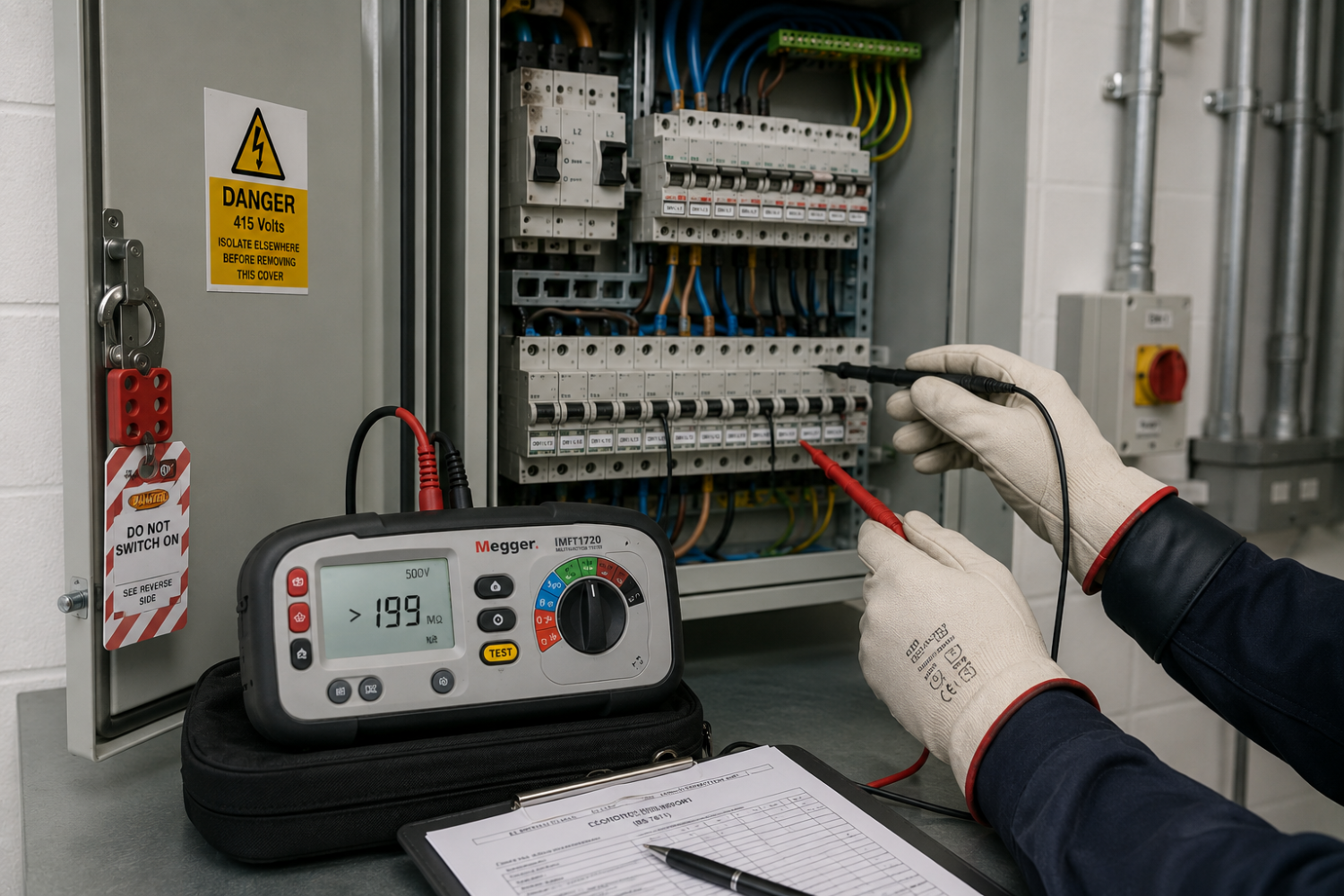
The inspection is normally followed by electrical testing using calibrated test equipment.
Once the inspection and testing have been completed, an Electrical Installation Condition Report is issued.
What does EICR mean?
EICR stands for Electrical Installation Condition Report.
It is a formal report describing the condition of a property’s fixed electrical installation at the time of the inspection.
An EICR may identify:
- Electrical defects
- Damaged equipment
- Deteriorated wiring
- Overloaded circuits
- Inadequate earthing or bonding
- Potential electric-shock risks
- Potential fire risks
- Unsuitable protective devices
- Alterations requiring further investigation
- Areas that could not be fully inspected
- Improvements recommended for electrical safety
The report provides an assessment of whether the installation is satisfactory for continued use within the agreed scope and limitations of the inspection.
How often does a commercial property need an EICR?
For many commercial buildings with an ordinary working environment, an EICR is commonly recommended at least every five years.
This can apply to properties such as:
- Offices
- Shops
- Salons
- Clinics
- Restaurants
- Cafés
- Hotels
- Community buildings
- Warehouses
- Small workshops
- Commercial units
However, five years should not be treated as an automatic rule for every property.
The electrician completing the inspection may recommend a shorter interval because of the installation’s condition, age, use or environment.
The recommended date for the next inspection should normally be recorded on the EICR.
Businesses should therefore check their latest report rather than relying solely on a general five-year guideline.
Is a commercial EICR a legal requirement?
The Electricity at Work Regulations 1989 require electrical systems used in workplaces to be maintained, so far as reasonably practicable, to prevent danger.
The regulations apply to work activities and a wide range of commercial premises. They do not simply state that every commercial property must receive an EICR on one fixed date or at one universal interval. Instead, dutyholders must ensure that electrical systems are maintained safely.
Periodic inspection and testing is one of the main ways a business can assess the condition of its fixed electrical installation and demonstrate that electrical safety is being managed.
Depending on the property, additional requirements may also arise through:
- Health and safety responsibilities
- Insurance conditions
- Lease agreements
- Licensing requirements
- Fire-risk assessments
- Contractual obligations
- Industry-specific rules
- Landlord responsibilities
- Local-authority requirements
Business owners and property managers should check which requirements apply specifically to their organisation and premises.
Who is responsible for arranging a commercial electrical inspection?
Responsibility may sit with different people depending on the ownership, lease and management arrangements.
The responsible party could be:
- The building owner
- The commercial landlord
- The tenant
- The employer
- A facilities manager
- A managing agent
- An appointed dutyholder
- An organisation occupying the building
Commercial leases often divide responsibility between the landlord and tenant.
For example, the landlord may remain responsible for the building’s main electrical infrastructure and communal areas, while the tenant may be responsible for electrical systems within the part of the property they occupy.
The lease should be checked carefully. Where responsibility is unclear, professional legal or property-management advice may be needed.
When might inspections be required more frequently?
Some commercial properties experience harsher conditions or heavier electrical use than a standard office.
A shorter inspection interval may be appropriate where there is:
- Frequent use of heavy electrical equipment
- Moisture or water
- Dust or debris
- High temperatures
- Corrosive substances
- Outdoor equipment
- Regular alterations
- Increased risk of physical damage
- Older wiring
- Previous electrical defects
- Machinery that vibrates
- Public access
- A higher risk of fire
- Critical equipment that cannot easily lose power
HSE guidance explains that additional inspections may be appropriate where a risk assessment identifies a greater risk, including equipment used in harsh environments.
The inspection schedule should therefore reflect the actual risks associated with the property rather than being based only on the building’s age.
Electrical inspections for offices
A typical office may contain relatively low-risk equipment compared with an industrial site, but its electrical installation still requires appropriate maintenance.
Office electrical systems can be affected by:
- Large numbers of computers
- Extension leads
- Overloaded socket outlets
- Kitchen appliances
- Electric heaters
- Air-conditioning systems
- Server rooms
- Alterations to desk layouts
- Damaged floor boxes
- Additional circuits installed over time
- Chargers and portable electronic equipment
For many ordinary offices, a maximum interval of five years may be appropriate, subject to the condition of the installation and the previous EICR recommendation.
A shorter interval may be recommended where the installation is older, heavily used or has a history of defects.
Electrical inspections for shops and retail premises
Retail premises often have long opening hours and extensive lighting systems.
They may also contain:
- Illuminated signs
- Refrigeration
- Display lighting
- Stockroom equipment
- Security systems
- Electric shutters
- Heating and cooling equipment
- Customer-accessible sockets
- Kitchen or food-preparation equipment
The electrical demand and operating environment should be considered when determining how often inspection and testing are required.
A shop that operates for long hours or contains refrigeration and commercial kitchen equipment may require a different maintenance plan from a small low-use retail unit.
Electrical inspections for warehouses
Warehouse electrical installations can be exposed to physical damage from vehicles, shelving, stock movement and industrial equipment.
Common areas requiring attention include:
- High-level lighting
- Distribution boards
- Loading-bay equipment
- Roller shutters
- Forklift charging areas
- Three-phase supplies
- Machinery circuits
- External lighting
- Damaged sockets and conduit
- Temporary electrical arrangements
Where conditions are dusty, damp or prone to impact damage, more frequent inspections may be recommended.
The inspection should be planned carefully, particularly where access equipment, machinery isolation or interruption to business operations may be involved.
Electrical inspections for workshops and industrial premises
Workshops and industrial premises may have greater electrical risks because they use machinery, high-current equipment and three-phase systems.
Electrical equipment may also be exposed to:
- Dust
- Oil
- Chemicals
- Heat
- Moisture
- Vibration
- Mechanical impact
- Frequent production changes
- Temporary equipment
- Heavy daily use
These environments may require inspection intervals shorter than five years.
The frequency should be determined by a competent person using the installation’s condition, operating environment, maintenance history and risk assessment.
Electrical inspections for restaurants, cafés and commercial kitchens
Commercial kitchens can place substantial demand on an electrical installation.
Equipment may include:
- Electric ovens
- Hobs
- Grills
- Refrigerators
- Freezers
- Dishwashers
- Extraction systems
- Water heaters
- Coffee machines
- Food-preparation equipment
Heat, steam, water and grease can make the environment more challenging than a typical office.
Regular electrical maintenance is particularly important because faults may affect customer safety, fire safety, food storage and business continuity.
The inspection frequency should be based on the condition and use of the installation rather than assuming every hospitality property can wait five years.
Electrical inspections for schools, care settings and public buildings
Properties used by children, older people, vulnerable individuals or members of the public may require particularly careful management.
These premises may include:
- Schools
- Nurseries
- Care homes
- Clinics
- Community centres
- Sports facilities
- Council buildings
- Public halls
The electrical installation may be used intensively and may include emergency systems, specialist equipment, commercial kitchens and public-access areas.
The organisation responsible for the building should maintain accurate inspection records and respond promptly to defects identified through testing.
Should a commercial property be tested when tenants change?
A change of commercial tenant can be a sensible time to arrange an electrical inspection, especially where:
- The previous electrical history is unclear
- The tenant is changing how the building will be used
- New machinery will be installed
- The electrical demand will increase
- The unit has been empty for a long period
- Alterations have been made
- The previous EICR is unavailable
- Damage may have occurred
- The next inspection date has passed
The inspection can help establish the condition of the electrical installation before the new business begins operating.
It also gives the landlord and tenant an opportunity to clarify responsibility for repairs, alterations and ongoing electrical maintenance.
Should electrical testing be completed before buying a commercial property?
An EICR can provide useful information before the purchase of a commercial building.
A standard property survey may not include comprehensive inspection and testing of the fixed electrical installation.
Without an electrical assessment, a buyer may not know whether the property requires:
- A distribution-board replacement
- New circuits
- Earthing improvements
- Remedial electrical work
- Partial rewiring
- A complete rewire
- Improvements before machinery is installed
- Additional capacity
- An upgraded electrical supply
Arranging an inspection before the purchase is completed can help the buyer understand possible electrical costs and plan future work.
Do I need an EICR after altering a commercial property?
New electrical installation work should be appropriately inspected, tested and certified.
Depending on the work completed, the contractor may provide an Electrical Installation Certificate or a Minor Electrical Installation Works Certificate.
An EICR is different because it assesses the condition of an existing installation.
A new EICR may be advisable where:
- Major alterations have been completed
- Several contractors have changed the installation
- The building’s use has changed
- New machinery has significantly increased demand
- The property has been divided into separate units
- Existing circuits have been extensively modified
- Suitable certification is unavailable
The electrical contractor should advise which inspection and certification documents are appropriate.
What does fixed wire testing mean?
Fixed wire testing is another common term for the inspection and testing of a building’s fixed electrical installation.
It normally covers electrical equipment and wiring permanently connected to the building, such as:
- Distribution boards
- Fixed cabling
- Socket circuits
- Lighting circuits
- Isolators
- Fixed equipment supplies
- Earthing arrangements
- Protective devices
It should not be confused with portable appliance testing.
What is the difference between an EICR and PAT testing?
An EICR assesses the fixed electrical installation.
PAT testing, now also commonly called electrical equipment testing, assesses portable or movable electrical appliances and equipment.
Examples may include:
- Kettles
- Computers
- Extension leads
- Portable heaters
- Power tools
- Vacuum cleaners
- Kitchen appliances
A commercial property may require both fixed electrical inspection and a suitable electrical-equipment maintenance programme.
PAT testing does not replace an EICR, and an EICR does not automatically assess every portable appliance in the building.
What happens during a commercial EICR?
The process normally starts with a discussion about the building and the required scope of the inspection.
The electrician may ask about:
- The type of business
- Operating hours
- Previous electrical reports
- Known electrical faults
- Areas with restricted access
- Specialist equipment
- Shutdown requirements
- Critical systems
- Recent alterations
- Future electrical plans
The installation is then visually inspected and electrically tested.
Some circuits may need to be isolated temporarily. Businesses should discuss this in advance so that disruption can be managed.
In larger buildings, the work may be completed in sections, outside normal working hours or during planned shutdown periods.
Will the electricity need to be turned off?
Some electrical testing requires circuits or equipment to be isolated.
This means parts of the building may temporarily lose power during the inspection.
The extent of the shutdown will depend on:
- The size of the building
- The number of circuits
- The testing required
- The type of business
- Access arrangements
- Critical equipment
- The condition of the installation
A commercial electrician should plan the inspection with the customer to minimise disruption.
This may involve:
- Out-of-hours testing
- Weekend work
- Testing in separate phases
- Temporary shutdowns
- Coordinating with facilities teams
- Identifying critical circuits in advance
What do the EICR codes mean?
Electrical observations are normally recorded using classification codes.
C1: Danger present
A C1 observation means there is an immediate danger.
Urgent action is required to remove the risk.
C2: Potentially dangerous
A C2 observation means the condition could become dangerous.
Urgent remedial action is recommended.
C3: Improvement recommended
A C3 observation means the installation could be improved, but the observation does not by itself make the EICR unsatisfactory.
FI: Further investigation required
FI means additional investigation is required without delay because the inspector could not fully determine the nature or extent of a potential problem.
An EICR containing a C1, C2 or FI observation will normally be assessed as unsatisfactory.
The report should be explained clearly so that the person responsible for the property understands which work is urgent and which improvements are advisory.
What happens if a commercial EICR is unsatisfactory?
An unsatisfactory report does not necessarily mean the entire property needs rewiring.
The required work will depend on the defects identified.
Possible remedial work may include:
- Replacing damaged accessories
- Repairing faulty circuits
- Improving earthing or bonding
- Replacing unsuitable protective devices
- Repairing loose connections
- Replacing damaged cables
- Upgrading a distribution board
- Separating incorrectly connected circuits
- Removing unsafe alterations
- Completing further investigation
- Rewiring part of the property
Urgent defects should be addressed promptly.
Once the remedial work has been completed, appropriate certification or written confirmation should be retained with the original EICR.
How long does a commercial EICR take?
The duration depends on the size and complexity of the installation.
A small shop or office may be completed relatively quickly, while a large commercial building, school, warehouse or industrial property may take several days.
Factors affecting the timescale include:
- The number of circuits
- The number of distribution boards
- The size of the building
- Access restrictions
- The quality of circuit labelling
- Previous electrical records
- The condition of the installation
- Specialist equipment
- Working-hour restrictions
- Whether testing must be phased
An initial survey can help establish the likely scope and duration.
How much does a commercial electrical inspection cost?
Commercial EICR costs vary considerably.
The quotation may depend on:
- Property size
- Number of circuits
- Number of distribution boards
- Single-phase or three-phase supplies
- Accessibility
- Operating hours
- Out-of-hours requirements
- Previous electrical records
- Type of premises
- Required documentation
- Specialist equipment
- Travel and location
- Whether remedial work is required
A quotation should clearly explain the inspection scope and any agreed limitations.
The cheapest price may not represent a thorough inspection, particularly where a property contains numerous circuits or complex electrical equipment.
How can businesses prepare for an electrical inspection?
Good preparation can make the inspection more efficient and reduce disruption.
Before the electrician arrives, businesses should consider:
- Finding the previous EICR
- Locating electrical certificates
- Providing access to distribution boards
- Identifying restricted areas
- Informing employees
- Planning shutdowns
- Identifying critical equipment
- Providing keys and access codes
- Recording known electrical faults
- Arranging access equipment where required
- Confirming working hours
- Providing site-specific safety information
The electrician should be told in advance about medical equipment, servers, alarms, refrigeration or machinery that cannot be disconnected without proper planning.
Why are regular commercial electrical inspections important?
Electrical faults can affect safety, property, equipment and business continuity.
Periodic inspection and testing can help identify:
- Deterioration before complete failure
- Overheated connections
- Damaged cables
- Unsuitable alterations
- Overloaded circuits
- Missing protection
- Earthing problems
- Equipment requiring further investigation
- Circuits that are no longer correctly labelled
Regular inspection also provides the business with documented evidence that the fixed electrical installation has been assessed by a competent person.
Electrical installations naturally deteriorate through age and use, which is why periodic inspection and testing should form part of a planned maintenance programme.
Do not wait for an electrical fault
An electrical inspection should not only be arranged after sockets stop working or a distribution board begins tripping.
Warning signs that require attention include:
- Burning smells
- Scorch marks
- Hot sockets or switches
- Buzzing or crackling
- Flickering lighting
- Frequent circuit-breaker operation
- Damaged accessories
- Exposed wiring
- Water near electrical equipment
- Electric shocks or tingling sensations
- Machinery causing repeated electrical faults
Where there appears to be an immediate danger, the affected equipment should not continue to be used.
HSE advises that where there is concern about electrical safety, equipment should be taken out of use and assessed by a competent person.
Choosing a commercial electrician
Commercial electrical inspection and testing should be completed by a competent contractor with suitable training, equipment and experience.
A professional commercial electrician should:
- Agree the inspection scope
- Understand the type of premises
- Plan any required shutdowns
- Use suitable test equipment
- Record agreed limitations
- Explain significant defects
- Provide a clear EICR
- Recommend an appropriate future inspection date
- Provide quotations for remedial work where requested
- Supply relevant certification
The contractor should also understand the additional planning required for occupied workplaces and business-critical electrical systems.
Commercial EICRs in Horley, Reigate, Redhill and Crawley
JPEC Electrical provides commercial electrical inspection and testing services for businesses, landlords, facilities managers, local authorities and organisations throughout:
- Horley
- Reigate
- Redhill
- Crawley
- Gatwick
- Banstead
- Dorking
- East Grinstead
- Surrey
- West Sussex
- The wider South East
Our services include:
- Commercial EICRs
- Fixed wire testing
- Periodic electrical inspections
- Electrical fault finding
- Distribution-board inspections
- Three-phase electrical testing
- Electrical remedial work
- Commercial electrical maintenance
- Emergency electrical support
- New electrical installations
- Electrical upgrades
- Testing and certification
JPEC Electrical already provides test, inspection and commercial electrical services alongside installation, emergency-response and maintenance support.
Book a commercial electrical inspection
For many standard commercial properties, an electrical inspection may be recommended at intervals of up to five years.
However, the correct interval depends on the building, its electrical installation, the environment, how it is used and the findings of the previous report.
Commercial premises exposed to moisture, dust, damage, heavy equipment or intensive use may require more frequent inspection and testing.
The safest approach is to check the date recorded on your latest EICR and arrange an assessment if the report is missing, expired or no longer reflects the way the building is being used.
Contact JPEC Electrical to arrange a commercial EICR, fixed wire test or electrical safety inspection in Horley, Reigate, Redhill, Crawley, Surrey, West Sussex or the surrounding areas.
Frequently asked questions
How often should an office have an EICR?
Many standard office installations are inspected at intervals of up to five years. The actual interval should be based on the condition of the installation, its use and the recommendation on the previous EICR.
Does every commercial property need an EICR every five years?
Not necessarily. Five years is a commonly used maximum interval for many commercial premises, but higher-risk properties may require more frequent testing.
Is fixed wire testing the same as an EICR?
Fixed wire testing normally refers to the inspection and testing used to produce an Electrical Installation Condition Report.
Is PAT testing included in a commercial EICR?
Normally, no. PAT or electrical equipment testing relates to portable and movable equipment. An EICR primarily covers the property’s fixed electrical installation.
Can a commercial property remain open during an EICR?
Sometimes. However, circuits may need to be switched off temporarily. The inspection can often be phased or arranged outside normal working hours to reduce disruption.
Who pays for a commercial EICR, the landlord or tenant?
This depends on the commercial lease and management arrangement. The lease should identify responsibility for inspecting, maintaining and repairing the electrical installation.
Does an unsatisfactory EICR mean the building needs rewiring?
No. An unsatisfactory result may be caused by one or several specific defects. The report should identify the observations and recommended remedial work.
Do I need an EICR before installing new machinery?
It may be advisable. The electrical installation should be assessed to confirm it has suitable capacity, circuits, protection and earthing for the proposed equipment.
Should I arrange an EICR when moving into a commercial unit?
Yes, particularly if the previous report is unavailable, expired or does not reflect your planned use of the building.
Who can carry out a commercial EICR?
It should be completed by a competent person with appropriate knowledge, experience, inspection qualifications and electrical test equipment.