
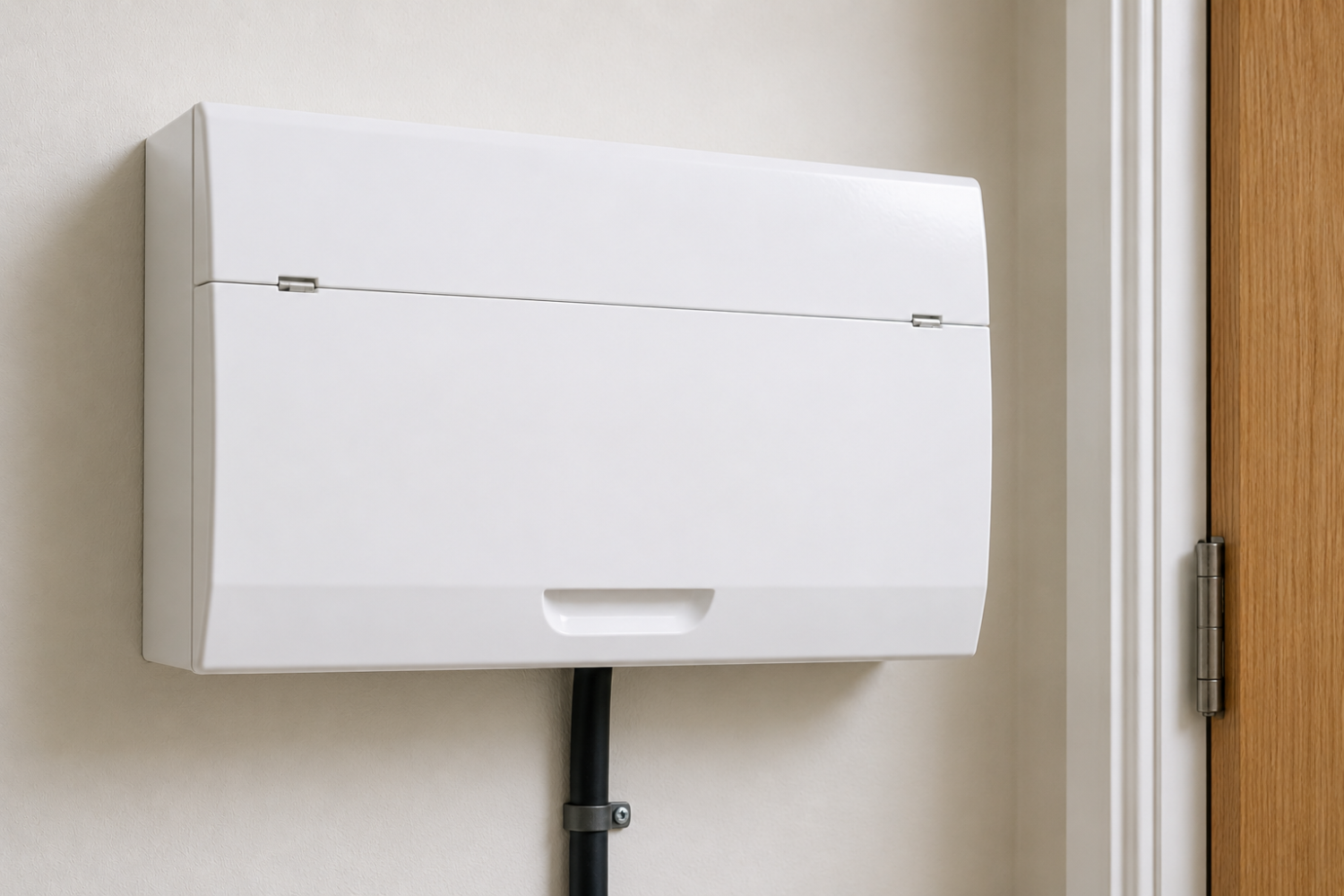
JPEC Electrical provides professional fuse box inspections, consumer unit replacements and electrical safety testing throughout Horley, Reigate, Redhill, Crawley, Surrey, West Sussex and the wider South East.
What Is the Difference Between a Fuse Box and a Consumer Unit?
The terms fuse box, fuse board and consumer unit are often used to describe the same part of an electrical installation.
Traditional fuse boxes commonly contain replaceable or rewireable fuses. Modern consumer units usually contain circuit breakers that can be reset once the cause of a fault has been identified and corrected. They may also include RCDs, RCBOs and surge protection devices designed to provide additional protection for people, wiring and electrical equipment.
For homeowners considering a fuse box replacement in Horley, Reigate, Redhill or Crawley, the first step should always be a professional assessment of the existing electrical installation.
What Are the Signs That My Fuse Box Needs Replacing?
There are several warning signs that may indicate your fuse box or consumer unit requires professional attention.
- Visible scorching or discolouration
- A burning smell near the fuse box
- Cracks, damage or missing covers
- Exposed internal components
- Buzzing or unusual noises
- Loose parts or connections
- Circuits that trip repeatedly
- Rewireable fuses that regularly blow
- No RCD protection
- Insufficient space for additional circuits
- Poor or missing circuit labels
- Previous unsafe electrical alterations
- Water damage or corrosion
A burning smell, heat damage or exposed electrical parts should never be ignored. Avoid touching the equipment and contact a qualified electrician as soon as possible.
JPEC Electrical can investigate suspected fuse box problems in homes, rental properties and commercial premises across Horley, Reigate, Redhill, Crawley, Surrey and West Sussex.
Does an Old Fuse Box Automatically Need Replacing?
An older fuse box does not automatically need replacing simply because it looks dated.
Some older fuse boxes may remain serviceable if the electrical installation has been properly inspected, tested and maintained. However, older equipment may not provide the same level of protection, convenience or capacity as a modern consumer unit.
The decision should be based on the physical condition of the fuse box, the condition of the wiring, the type of protective devices installed, RCD protection, earthing and bonding, test results, signs of overheating, previous alterations, the property’s current demand and planned future upgrades.
For example, an older property in Reigate or Redhill may have a fuse box that has operated for many years but does not have enough capacity for a new extension, electric heating system, garden room or additional electrical circuits.
What Is RCD Protection?
An RCD, or residual current device, is a safety device designed to quickly disconnect the electrical supply when it detects certain types of electrical fault.
RCD protection can significantly reduce the risk of serious electric shock. Depending on the installation, it may be required for socket outlets, bathrooms, outdoor equipment, concealed cables, garden buildings, EV chargers, lighting circuits and equipment in higher-risk areas.
If your fuse box does not have an RCD test button, it may be worth arranging an electrical inspection. JPEC Electrical can inspect your existing protection and recommend a suitable consumer unit upgrade in Surrey or West Sussex where required.
Why Does My Consumer Unit Keep Tripping?
A consumer unit normally trips because a protective device has detected an electrical fault, overload or leakage current.
Possible causes include a faulty appliance, damaged wiring, water entering an outdoor circuit, too many appliances on one circuit, a damaged socket or light fitting, a fault with an electric shower, cooker or immersion heater, outdoor lighting problems, deterioration within the installation or an incorrectly altered circuit.
You should not repeatedly reset a circuit breaker or RCD without identifying the cause. Replacing the consumer unit will not necessarily correct a fault elsewhere, so proper electrical fault finding is essential.
JPEC Electrical provides electrical fault finding and emergency electrical support throughout Crawley, Horley, Reigate, Redhill and the surrounding areas.
Do I Need an EICR Before Replacing My Fuse Box?
An Electrical Installation Condition Report, commonly known as an EICR, is a detailed assessment of the condition and safety of a property’s fixed electrical installation.
An EICR examines more than the fuse box and may include wiring, circuits, protective devices, earthing, bonding, sockets, switches and other fixed electrical equipment.
A full EICR may not be required for every consumer unit replacement. However, the existing installation must still be properly assessed and tested before a new consumer unit is connected. JPEC Electrical can advise whether an EICR, targeted inspection or further investigation is appropriate.
Will Replacing My Fuse Box Mean Rewiring My House?
Replacing a fuse box does not automatically mean the entire property must be rewired.
In many homes, existing circuits may be suitable for connection to a new consumer unit after inspection and testing. In other properties, testing may identify deteriorated insulation, missing earthing, inadequate bonding, damaged circuits, poor alterations, insulation resistance faults or wiring unsuitable for the intended load.
Installing a modern consumer unit onto defective wiring will not correct the underlying faults. JPEC Electrical can assess existing installations for customers considering house rewiring or consumer unit replacement in Horley, Redhill, Crawley, Reigate, Surrey or West Sussex.
When Might a Consumer Unit Upgrade Be Recommended?
A consumer unit upgrade may be recommended when the existing equipment is damaged, unsuitable, lacks important protection or cannot safely accommodate planned work.
The Fuse Box Is Damaged
Cracked covers, missing blanks, loose components, corrosion or heat damage can compromise electrical safety and require urgent assessment.
Additional Circuits Are Being Installed
A kitchen renovation, extension, loft conversion, garden room, air-conditioning system or workshop may require new dedicated electrical circuits.
There Is Insufficient Space
Older fuse boxes may not have enough capacity for additional circuits or the correct protective devices.
The Property Is Being Renovated
Major refurbishment work provides an opportunity to inspect the wider installation and install a consumer unit suitable for current and future requirements.
High-Load Equipment Is Being Added
Electric showers, induction hobs, electric heating systems, air conditioning and other high-demand equipment should be considered as part of the overall electrical design.
Electrical Testing Identifies Problems
An EICR or electrical inspection may identify inadequate protection, damaged equipment or defects requiring remedial work.
Improved Circuit Protection Is Required
A correctly designed modern consumer unit can provide individual circuit protection, helping to reduce the number of circuits affected by a single fault.
Do I Need a New Fuse Box for an Extension or Renovation?
A completely new consumer unit is not always required when building an extension or renovating a property. The electrician will assess available space, the condition of the existing unit, required protection, supply capacity, earthing and bonding, test results and whether a separate distribution board would be more appropriate.
JPEC Electrical works with homeowners, builders, developers and property managers across Surrey and West Sussex, providing electrical installations for renovations, extensions, refurbishments and new projects.
What Happens During a Consumer Unit Replacement?
A consumer unit replacement normally involves more than removing the old fuse box and installing a new one. The process may include:
- Inspecting and testing the existing electrical installation
- Identifying and labelling each circuit
- Checking the earthing and bonding
- Safely isolating the electrical supply
- Removing the existing fuse box
- Installing the new consumer unit
- Connecting the existing circuits
- Carrying out electrical testing
- Confirming that protective devices operate correctly
- Completing the required electrical certification
- Explaining the new consumer unit to the customer
Existing faults may only become fully apparent once detailed testing has been carried out. A professional electrical contractor should clearly explain any findings and advise whether additional remedial work is required.
How Long Does a Fuse Box Replacement Take?
The time required depends on the size and condition of the installation. A straightforward domestic consumer unit replacement may often be completed within a working day, while larger properties, commercial installations, unclear circuit arrangements or faults discovered during testing may take longer.
The electricity supply will normally need to be switched off for part of the work, so this should be planned with the electrician beforehand.
What Certification Should I Receive?
After a consumer unit replacement, you should receive the relevant electrical certification for the completed work. Depending on the property and the work completed, building regulations notification may also be required.
Keep all electrical certificates safely, as they may be useful for future work, property sales, rental records, insurance enquiries, warranties and future inspections.
Do Landlords Need to Replace Old Fuse Boxes?
Landlords do not necessarily have to replace a fuse box simply because it is old. The important question is whether the installation meets the required safety standards.
Landlords should follow the findings of the electrical report rather than replacing equipment purely because of its appearance. JPEC Electrical supports landlords, housing providers, property managers and letting agents with EICRs, remedial work and consumer unit replacements across Surrey, West Sussex and the wider South East.
What About Commercial and Industrial Consumer Units?
Commercial and industrial premises can have more complex electrical distribution equipment than domestic homes. Businesses may require distribution for machinery, kitchens, offices, warehouses, workshops, lighting, heating and cooling, fire and security systems, data equipment, three-phase supplies, EV charging and external buildings.
JPEC Electrical provides commercial electrical installation, inspection, testing, maintenance and distribution board upgrades across Horley, Crawley, Reigate, Redhill, Surrey, West Sussex and the wider South East.
Can I Replace a Fuse Box Myself?
A consumer unit replacement is not suitable as a DIY project. The work involves safe isolation, circuit identification, electrical design, protective device selection, inspection, testing and certification.
Incorrect work could result in exposed live parts, ineffective fault protection, overheated connections or circuits that appear to work but remain unsafe. A consumer unit should always be replaced by a qualified electrical contractor.
How Can I Check My Fuse Box Safely?
You should never remove the cover of a fuse box or touch internal components. You can carry out a basic external visual check for damage, missing blanks, scorching, burning smells, buzzing noises, water damage, poor labelling and the presence of an RCD test button.
Contact a qualified electrician if anything appears damaged, overheated or unusual. Do not repeatedly reset a protective device if it continues to trip.
Choosing a Fuse Box Replacement Electrician in Surrey or West Sussex
Choose an established electrical contractor that can inspect the existing installation, explain the findings clearly and provide the necessary testing and certification. Ask whether existing circuits will be tested, what equipment will be installed, what remedial work is included, how circuits will be labelled and what certification you will receive.
The cheapest quotation may not include the same level of inspection, testing, equipment, remedial work or certification. A professional quotation should clearly explain the proposed scope of work.
JPEC Electrical Can Help
JPEC Electrical provides professional fuse box inspections, consumer unit replacements, EICRs, electrical testing, fault finding, remedial work and complete electrical installations for homeowners, landlords, letting agents, housing providers, businesses, industrial premises, agricultural sites, builders, developers, local authorities and organisations.
From our head office in Horley, we provide professional electrical services throughout Horley, Reigate, Redhill, Crawley, Surrey, West Sussex and the wider South East of England.
Whether you are concerned about an old fuse box, experiencing repeated tripping, renovating a property or planning additional circuits, JPEC Electrical can inspect your installation and recommend the most appropriate solution.
A fuse box should not be replaced purely because it looks old. However, visible damage, overheating, missing protection or unsatisfactory electrical test results should never be ignored.