Modern homes rely on more sensitive electrical equipment than ever before. Televisions, computers, smart heating controls, security systems, kitchen appliances, EV chargers, solar PV systems and battery storage equipment can all be vulnerable to sudden increases in voltage.
This leads many homeowners to ask: does my home need surge protection?
A surge protection device can help reduce the risk of transient overvoltages damaging equipment connected to your electrical installation. Whether you are renovating a property, replacing a consumer unit or installing new electrical technology, surge protection should form part of the electrical design and assessment.
What Is an Electrical Power Surge?
An electrical power surge is a sudden, short-duration increase in voltage within an electrical installation.
These transient overvoltages may be associated with atmospheric activity, disturbances transmitted through the electricity supply or switching operations involving electrical equipment. BS 7671 includes requirements concerning the protection of installations against transient overvoltages and the correct selection and installation of surge protective devices.
Although a surge may last only a fraction of a second, it can place considerable stress on sensitive electronic components.
A significant surge could cause equipment to fail immediately. Smaller repeated surges may also contribute to the gradual deterioration of electronic components, potentially shortening the lifespan of appliances and electrical systems.
What Is a Surge Protection Device?
A surge protection device, commonly shortened to SPD, is designed to limit transient overvoltage within an electrical installation.
When an excessive voltage occurs, the SPD diverts the associated surge current safely away and limits the voltage reaching connected equipment.
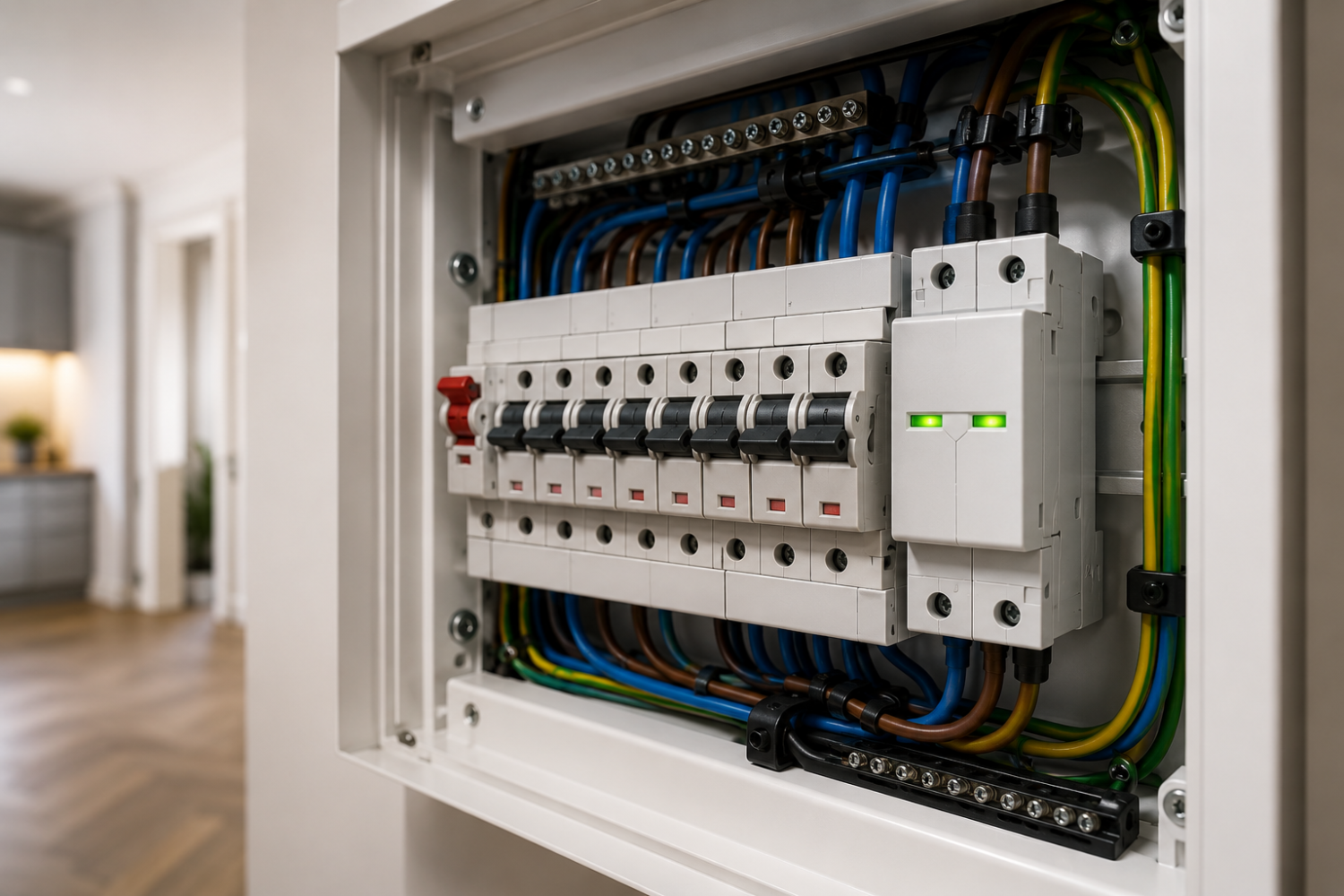
An SPD is normally installed within or alongside the consumer unit or distribution board. Depending on the property and the electrical system, additional surge protection may also be installed closer to particularly sensitive or valuable equipment.
A qualified electrician must select the correct type of SPD and ensure it is compatible with the electrical installation, earthing arrangement and protective devices.
Is Surge Protection the Same as an RCD?
No. Surge protection devices and residual current devices perform different functions.
An RCD is primarily intended to reduce the risk of electric shock by disconnecting the supply when it detects an imbalance or leakage of current.
An SPD is intended to limit transient overvoltage and help protect electrical and electronic equipment.
A modern consumer unit may contain RCD or RCBO protection as well as surge protection. One device does not replace the other. Electrical Safety First confirms that RCD protection is used to protect people against electric shock where electrical equipment becomes faulty.
Why Is Surge Protection Becoming More Important?
The number and value of electronic devices connected inside homes and commercial buildings has increased considerably.
A typical property may now contain:
- Smart televisions and entertainment systems
- Computers, routers and home-office equipment
- Smart thermostats and heating controls
- Alarm, CCTV and door-entry systems
- Modern kitchen appliances
- Air-conditioning systems
- Solar PV inverters
- Battery storage systems
- Electric vehicle charging equipment
- Smart home controls and automation
Many of these systems contain sensitive electronic components. Amendment 4 of BS 7671 reflects the increasing use of technologies such as EV charging, battery storage, solar PV and connected infrastructure within modern domestic installations.
Replacing damaged equipment can be expensive. Damage to control equipment could also affect heating, security, internet access, renewable-energy generation or EV charging.
Does Every Home Require Surge Protection?
The need for surge protection should be determined as part of the design and assessment of the electrical installation.
The electrician must consider the nature of the property, the installation, the connected equipment and the consequences that an overvoltage could cause. Current electrical work should be designed using the applicable edition of BS 7671 and its amendments.
For many homeowners, the cost of incorporating surge protection into a new or replacement consumer unit may be relatively small compared with the combined value of the electrical equipment connected throughout the property.
However, the correct solution cannot be established simply by purchasing a generic device. The installation must be inspected and the SPD must be selected, positioned, connected and tested correctly.
Should Surge Protection Be Included with a New Consumer Unit?
When a consumer unit is being replaced, the electrician should assess the installation against the current requirements and determine the appropriate protective measures.
A consumer unit upgrade presents a practical opportunity to improve the overall protection of the installation. Depending on the assessment, this may include:
- Surge protection
- RCBO protection for individual circuits
- Improved circuit identification
- Appropriate fire-resistant construction
- Correct isolation arrangements
- Testing of existing circuits
- Updated certification and labelling
Replacing a consumer unit does not automatically mean that every existing circuit must be completely rewired. However, the existing installation must be inspected and tested to establish whether it is safe and suitable for connection to the new equipment.
Can an SPD Be Added to an Existing Consumer Unit?
In some circumstances, surge protection can be added to an existing installation.
Whether this is practical will depend on factors including:
- The type and condition of the consumer unit
- The space available within or beside it
- The earthing arrangement
- The existing protective devices
- The manufacturer’s requirements
- The condition of the electrical installation
- The location and length of the SPD connections
An electrician may recommend installing an additional enclosure, modifying the distribution arrangement or replacing an outdated consumer unit where necessary.
The property should be assessed before any recommendation is made.
Do Solar Panels, Battery Storage and EV Chargers Need Surge Protection?
Properties containing solar PV systems, battery storage or EV charging equipment require careful electrical design.
These technologies include electronic controls, inverters, communication equipment and power-conversion components. Surge protection requirements must therefore be considered across the complete installation rather than treating each product in isolation.
The electrician or system designer may need to consider protection on both AC and DC sections, coordination between different SPDs, manufacturer instructions, cable routes and the position of the equipment.
Surge protection should form part of the initial design whenever renewable-energy or electric-vehicle technology is installed.
What Are the Signs That an SPD Needs Attention?
Many surge protection devices contain a visual status indicator.
The normal and replacement indications vary between manufacturers, so the device instructions should always be followed. If the indicator shows that protection is no longer available, the SPD cartridge or device may need to be replaced.
You should arrange an electrical inspection if:
- The SPD status indicator has changed
- Electrical equipment has failed following a storm or supply disturbance
- There are signs of overheating inside the consumer unit
- Circuit breakers are repeatedly tripping
- You hear buzzing or crackling from the consumer unit
- You notice burning smells or discolouration
- The installation has not been inspected for a considerable time
Do not remove the consumer-unit cover or attempt to replace an SPD yourself. Consumer units contain live components and should only be accessed by a competent electrician.
Is a Surge-Protected Extension Lead Enough?
A surge-protected extension lead may provide a limited level of protection for equipment plugged directly into it, but it is not the same as coordinated surge protection installed at the electrical distribution board.
It will not protect fixed wiring, lighting circuits, heating controls, alarms, EV chargers or equipment connected elsewhere in the property.
Extension leads must also be used safely. They should not be overloaded, damaged, daisy-chained or treated as a permanent substitute for sufficient fixed socket outlets.
Where whole-property protection is required, the installation should be assessed by a qualified electrician.
Can Surge Protection Prevent All Electrical Damage?
No protective device can guarantee that equipment will never be damaged.
An SPD is designed to limit transient overvoltage, but its effectiveness depends on correct design, selection, installation and coordination. The severity and source of the event, the earthing arrangement, cable routes and the condition of the electrical installation can all affect performance.
Surge protection is one part of a wider electrical-safety system that may also include:
- Correct earthing and bonding
- RCD or RCBO protection
- Suitable circuit breakers
- Safe isolation
- Proper cable sizing
- Effective inspection and testing
- Lightning protection where applicable
- Regular maintenance
How Can JPEC Electrical Help?
JPEC Electrical provides professional electrical inspection, testing, consumer-unit upgrades and surge protection solutions for domestic, commercial, industrial and agricultural properties.
Our experienced electricians can assess your existing installation, identify whether surge protection is already present and recommend an appropriate solution based on the property and the equipment connected to it.
We support customers throughout Horley, Reigate, Redhill, Crawley, Surrey, West Sussex, Kent and the wider South East.
Whether you are replacing an older fuse board, renovating a property, installing solar PV, adding battery storage or preparing your home for an electric vehicle charger, JPEC Electrical can ensure the work is properly designed, installed, tested and certified.
Arrange an Electrical Assessment
Surge protection can help safeguard the increasingly valuable electrical and electronic equipment used in modern properties.
The correct protection should always be selected following an assessment of the complete installation. A professional electrical inspection can determine the condition of your consumer unit, protective devices, wiring, earthing and connected systems.
To discuss surge protection, consumer-unit upgrades or electrical inspection and testing, contact JPEC Electrical today.