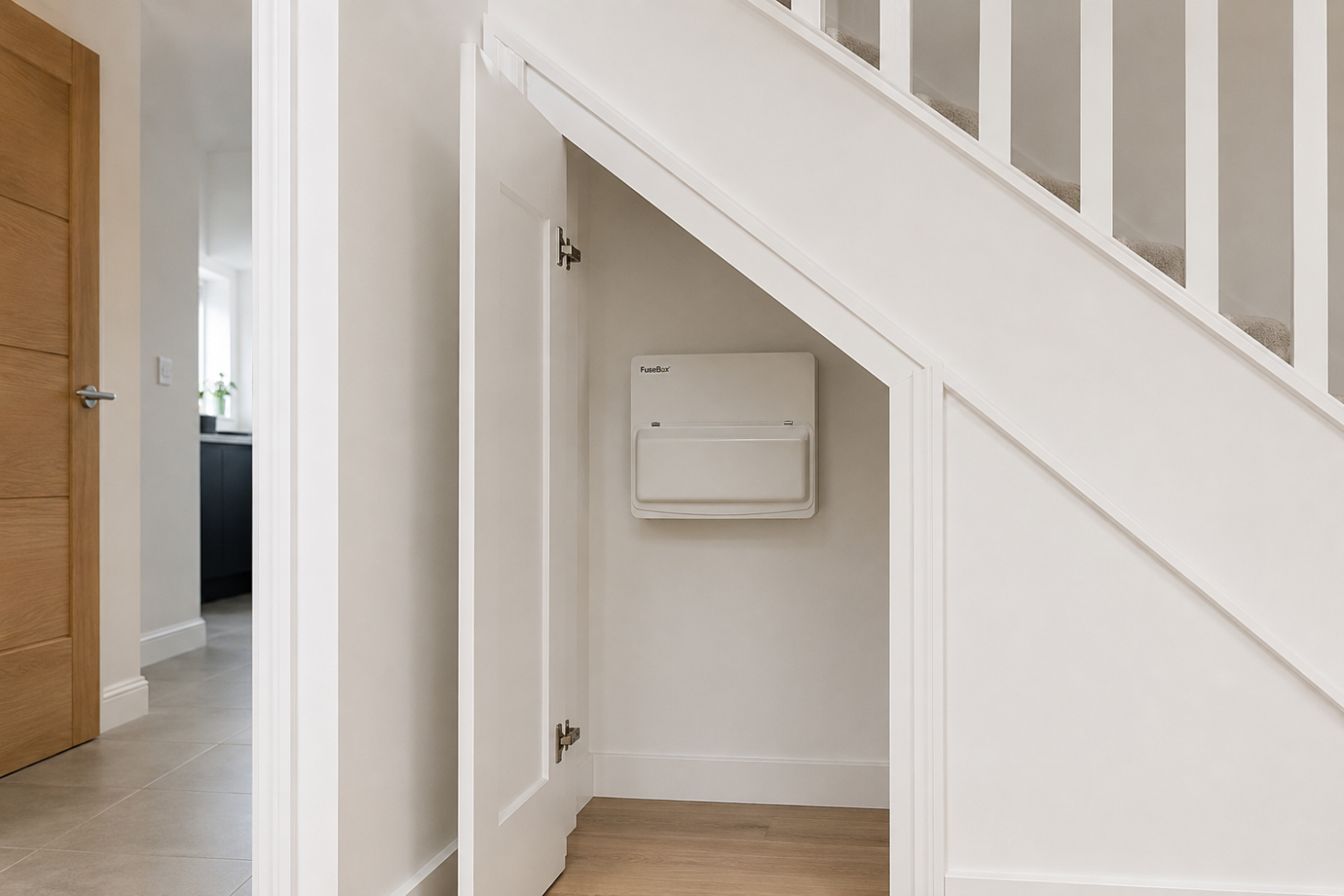
The consumer unit is one of the most important parts of your property’s electrical installation. Often still called a fuse box, it controls and protects the electrical circuits supplying your lights, sockets, appliances and fixed electrical equipment.
Although consumer units are normally hidden away in cupboards, garages, hallways or utility rooms, they play a major role in protecting people and property from electrical faults.
If your consumer unit is old, damaged, regularly trips or does not provide modern electrical protection, you may be wondering whether it needs replacing.
In this guide, JPEC Electrical explains how to recognise an outdated consumer unit, when an upgrade may be recommended and what happens during a professional consumer unit replacement.
JPEC Electrical provides consumer unit upgrades, electrical inspections, testing, fault finding and electrical installation services across Horley, Reigate, Redhill, Crawley, Surrey, West Sussex and the surrounding areas.
What Is a Consumer Unit?
A consumer unit is the main distribution point for the electricity entering your property.
Electricity reaches the consumer unit from the electricity meter. It is then divided into separate circuits, which may include:
- Upstairs and downstairs lighting
- Kitchen and general socket circuits
- Electric ovens and hobs
- Electric showers
- Immersion heaters
- Outdoor power and lighting
- Garages and outbuildings
- Electric heating
- Air conditioning systems
- EV chargers
- Solar panels and battery storage systems
The protective devices inside the consumer unit are designed to disconnect the electricity when a problem is detected.
This may help reduce the risk of electric shock, overheating, electrical fires or damage to electrical equipment.
Is a Consumer Unit the Same as a Fuse Box?
People often use the terms consumer unit and fuse box to describe the same piece of equipment.
However, a traditional fuse box normally contains replaceable or rewireable fuses. When a fault occurs, the fuse wire breaks and must be replaced before the circuit can be used again.
A modern consumer unit normally contains resettable circuit breakers and additional protective devices.
Older fuse boxes are not automatically unsafe simply because of their age. However, they may not provide the same level of protection as a properly designed modern consumer unit.
The condition of the wiring, protective devices, earthing, bonding and overall electrical installation must be assessed before an electrician can recommend the correct work.
Does an Old Fuse Box Have to Be Replaced?
There is no rule that says every older fuse box must immediately be replaced.
A plastic consumer unit, an older-style fuse box or a board without the latest equipment is not automatically proof that an electrical installation is dangerous.
However, an upgrade may be recommended if the existing equipment is damaged, unsuitable, overloaded or unable to provide appropriate protection for the installation.
Electrical Safety First guidance explains that a consumer unit does not automatically need replacing solely because it has a plastic enclosure or lacks built-in RCD protection. The decision should be based on the condition and safety of the complete installation.
A qualified electrician should inspect and test the installation rather than recommending a replacement based on appearance alone.
Signs Your Consumer Unit May Need Upgrading
Several warning signs may suggest that your consumer unit should be inspected.
You Still Have Rewireable Fuses
Older fuse boxes may contain fuse carriers with replaceable fuse wire.
These systems can continue to operate, but they do not offer all the functions available from modern circuit breakers and residual current protection.
It may also be difficult to identify faults or safely restore a circuit if the fuse wire has been replaced incorrectly.
If your property still has rewireable fuses, arranging an electrical inspection is sensible.
There Is No RCD Test Button
An RCD, or residual current device, is designed to disconnect the electricity quickly if it detects current flowing along an unintended path.
This can provide additional protection against electric shock.
You can often identify an RCD by looking for a button marked “Test” or “T” inside the consumer unit.
A lack of RCD protection does not always mean that the whole consumer unit must be replaced. However, it is a strong reason to ask a qualified electrician to assess the installation and recommend suitable improvements.
The Consumer Unit Is Damaged
Cracks, missing covers, loose parts, exposed wiring or broken switches should not be ignored.
The enclosure protects people from coming into contact with live electrical components. Damage may also allow dust, moisture or debris to enter the consumer unit.
Do not remove the cover or attempt to investigate internal components yourself.
There Are Burn Marks or Discolouration
Scorching, dark marks, melted plastic or discolouration around the consumer unit may indicate overheating or a loose electrical connection.
You may also notice an unusual burning smell, buzzing or crackling.
These signs require prompt attention from a qualified electrician. If there is smoke, visible fire or an immediate danger, move away from the equipment and contact the emergency services where appropriate.
Circuits Frequently Trip
Circuit breakers are supposed to trip when they detect certain faults.
An occasional trip may be caused by a faulty appliance. However, repeated tripping can indicate:
- A damaged cable
- A faulty appliance
- An overloaded circuit
- Moisture entering electrical equipment
- A loose connection
- Deteriorated wiring
- A fault within the consumer unit
Replacing the consumer unit without identifying the underlying fault will not necessarily solve the problem.
Professional electrical fault finding should be completed first.
You Are Planning Major Electrical Work
A consumer unit assessment may be required when planning work such as:
- A house extension
- A kitchen refurbishment
- A loft conversion
- An electric shower
- New outdoor power
- A garden office
- An EV charger installation
- Solar PV and battery storage
- Air conditioning
- Additional circuits
- A major property renovation
The existing consumer unit may not have enough physical space or capacity for the proposed circuits.
An electrician will assess the existing electrical supply, earthing arrangements, protective devices and the expected electrical demand before recommending an upgrade.
Your Property Has Had Several Alterations
Properties are often changed over many years by different owners and contractors.
Extra sockets, lighting, heating, outbuildings or other circuits may have been added at different times. The consumer unit may contain unclear labels, disconnected circuits or modifications that have not been properly documented.
An Electrical Installation Condition Report can help establish the condition of the fixed wiring and identify whether further investigation or improvements are required.
What Protection Can a Modern Consumer Unit Provide?
The exact design will depend on the property and the electrical installation.
A modern consumer unit may contain several types of protective device.
Circuit Breakers
Circuit breakers disconnect a circuit when they detect an overload or short circuit.
Unlike traditional fuse wire, a circuit breaker can normally be reset once the cause of the fault has been identified and corrected.
It should not simply be switched back on repeatedly without investigating why it is tripping.
RCDs
An RCD monitors the electrical current flowing through a circuit.
If it detects an imbalance that may indicate current is escaping from the intended circuit, it disconnects the supply quickly.
RCDs are particularly important for circuits supplying sockets, bathrooms and electrical equipment used outdoors.
RCBOs
An RCBO combines overload, short-circuit and residual current protection for an individual circuit.
Using individual RCBOs can help limit disruption because a fault on one circuit may not disconnect several unrelated circuits at the same time.
For example, a fault on an outdoor socket circuit may be isolated without necessarily switching off lighting or other socket circuits.
Surge Protection
A surge protection device, often shortened to SPD, is designed to help protect electrical equipment from temporary increases in voltage.
Electrical surges may be caused by events within the electricity network or by equipment switching.
Surge protection can be particularly relevant in properties containing sensitive electronic equipment, smart home technology, commercial systems, solar inverters, battery storage or electric vehicle charging equipment.
Arc Fault Protection
An arc fault detection device, or AFDD, is designed to identify certain dangerous electrical arcing conditions.
Whether AFDD protection is required or recommended depends on the type of property, circuit and installation design.
Your electrician should determine which protective devices are appropriate rather than using the same consumer unit arrangement for every building.
Will a New Consumer Unit Fix Old Wiring?
A new consumer unit does not replace or repair the wiring around the property.
Before installing a new consumer unit, the existing circuits should be inspected and tested. This is important because modern protective devices may identify faults that an older fuse box did not detect.
Testing may reveal problems such as:
- Damaged cables
- Poor insulation resistance
- Incorrect circuit connections
- Missing earthing
- Inadequate bonding
- Shared neutral conductors
- Faulty accessories
- Unauthorised alterations
- Outdoor wiring affected by water
- Circuits that cannot safely be reconnected
Any necessary remedial work should be discussed before or during the consumer unit replacement.
In some properties, only minor corrections are required. In others, additional repairs or partial rewiring may be needed.
Do I Need an EICR Before Replacing a Consumer Unit?
A full Electrical Installation Condition Report is not always required before every consumer unit replacement.
However, the electrician must carry out appropriate inspection and testing to confirm that the existing circuits are suitable for connection to the new equipment.
An EICR may be sensible where:
- The history of the installation is unknown
- The wiring is particularly old
- There have been several alterations
- The property is being purchased or sold
- The property is rented
- Faults or damage are already suspected
- The electrical installation has not been inspected for a long time
An EICR provides a broader assessment of the fixed electrical installation. NICEIC describes it as a comprehensive health check of a property’s electrical system.
What Happens During a Consumer Unit Upgrade?
The process normally begins with an assessment of the existing installation.
Initial Survey
An electrician will inspect the existing consumer unit and gather information about the property.
This may include checking:
- The incoming electricity supply
- The meter and main fuse arrangement
- Earthing and bonding
- Existing circuit arrangements
- Available space
- The number of circuits
- Proposed future electrical work
- Signs of damage or previous alterations
Electrical Testing
The circuits will be tested to identify defects and confirm whether they can be safely connected to the new consumer unit.
The electrician should explain any faults discovered and whether they need to be corrected before the upgrade can be completed.
Temporary Power Disconnection
The electricity supply will need to be switched off during the work.
The length of the interruption depends on the size and condition of the installation. A straightforward domestic consumer unit replacement may be completed within a working day, while larger or more complicated installations can take longer.
Installation of the New Consumer Unit
The old unit is removed and the circuits are transferred to the new equipment.
The new consumer unit should be securely fitted, correctly labelled and configured for the specific electrical installation.
Inspection, Testing and Certification
Once installed, the electrical work must be inspected and tested.
The customer should receive the relevant electrical certification and information about the protective devices, including how to operate the RCD test controls.
Depending on the type and location of the work, Building Regulations notification may also be required.
How Much Does a Consumer Unit Upgrade Cost?
The cost of replacing a consumer unit varies because not every property requires the same amount of work.
The price may depend on:
- The number of circuits
- The type of protective devices selected
- The condition of the existing wiring
- Accessibility
- Earthing and bonding requirements
- Faults discovered during testing
- Whether cables need extending
- Whether the electricity supply equipment requires attention
- The size and type of property
- Certification and notification requirements
A very low quotation may not include adequate testing, remedial work, certification or suitable protective devices.
The most reliable way to obtain a price is to arrange a survey with a qualified electrical contractor.
Can I Replace a Consumer Unit Myself?
Consumer unit replacement is not a suitable DIY task.
The work involves the main distribution equipment for the property and requires specialist knowledge, testing instruments and electrical certification.
Incorrect installation can create a risk of electric shock, fire, equipment damage or circuits that fail to disconnect correctly during a fault.
The work must also satisfy the applicable electrical safety and Building Regulations requirements.
Always use a competent and appropriately registered electrical contractor.
Consumer Unit Upgrades for Landlords
Landlords are responsible for ensuring that the electrical installation in a rented property is safe.
Electrical safety regulations in England require relevant rented homes to be inspected and tested by a qualified person at least every five years, or sooner where the previous report specifies a shorter period.
An EICR does not automatically require every older consumer unit to be replaced. The electrician will assess the installation and apply the appropriate inspection classifications.
Where dangerous or potentially dangerous defects are identified, remedial work may be required within the timescale specified by the regulations or inspection report.
JPEC Electrical can support landlords and property managers with EICRs, consumer unit upgrades, electrical repairs, remedial work and certification across Surrey and West Sussex.
Consumer Unit Upgrades for Commercial Properties
Consumer units and distribution boards are also essential within offices, shops, workshops, communal areas, hospitality venues and other commercial properties.
Commercial electrical installations may have more complex requirements because of:
- Higher electrical demand
- Three-phase supplies
- Specialist machinery
- Emergency lighting
- Fire alarm equipment
- Data and communication systems
- Refrigeration
- Heating and air conditioning
- Business-critical equipment
- Out-of-hours working requirements
Any distribution board upgrade should be properly planned to minimise disruption and ensure that circuits are clearly identified, tested and documented.
JPEC Electrical works with businesses, landlords, local authorities, facilities managers and commercial property owners across the South East.
Should I Upgrade Before Installing an EV Charger or Solar Panels?
Not every EV charger, solar panel or battery installation requires a new consumer unit.
However, the existing installation must be assessed before additional electrical equipment is connected.
The electrician may need to consider:
- Available supply capacity
- Existing electrical demand
- Space for an additional circuit
- Earthing arrangements
- RCD compatibility
- Surge protection
- Cable routes
- The location of the consumer unit
- Coordination with existing protective devices
- Whether an additional distribution board would be more appropriate
Having the electrical system assessed early can prevent delays and unexpected work during the installation.
How Often Should I Check My Consumer Unit?
You should visually check the outside of the consumer unit occasionally without removing any covers.
Look for:
- Cracks or physical damage
- Burn marks
- Discolouration
- Unusual noises
- A burning smell
- Loose covers
- Missing circuit labels
- Protective devices that will not reset
RCDs should also be tested using the test button in accordance with the manufacturer’s instructions and the guidance displayed on or near the consumer unit.
If the device does not operate when tested, contact an electrician.
Do not touch the consumer unit if it appears damaged, wet, unusually hot or unsafe.
Choosing an Electrician for a Consumer Unit Upgrade
A consumer unit upgrade should involve more than simply replacing one box with another.
A professional electrical contractor should:
- Inspect the existing installation
- Test the circuits
- Explain any defects
- Design suitable protection for the property
- Install correctly rated equipment
- Label the circuits clearly
- Complete final testing
- Provide electrical certification
- Explain how the new equipment operates
- Complete any required notification
You should also check that the quotation clearly explains what is included and how unexpected faults will be handled.
Consumer Unit Upgrades in Horley, Reigate, Redhill and Crawley
JPEC Electrical provides professional consumer unit replacements and fuse box upgrades for homes, landlords and businesses throughout Horley, Reigate, Redhill, Crawley and the surrounding areas.
Our wider coverage includes Surrey, West Sussex and locations across the South East.
Our electrical services include:
- Consumer unit upgrades
- Fuse box replacements
- Electrical inspections and testing
- EICRs
- Electrical fault finding
- Domestic electrical installations
- Commercial electrical installations
- Landlord electrical safety work
- Electrical repairs
- Additional circuits
- Lighting and socket installations
- Electrical work for extensions and refurbishments
- Electrical preparation for EV chargers and renewable energy systems
Whether you are concerned about an old fuse box, planning improvements or experiencing repeated electrical faults, our team can assess the installation and recommend the appropriate next step.
Does Your Consumer Unit Need Checking?
An old consumer unit does not always need to be replaced immediately. The important question is whether the consumer unit and the electrical installation provide suitable protection and remain safe for continued use.
Warning signs such as burn marks, damaged equipment, missing RCD protection, repeated tripping or an unclear history should be investigated by a qualified electrician.
JPEC Electrical can inspect your consumer unit, test the existing circuits and provide clear advice based on the actual condition of your property.
Contact JPEC Electrical to arrange a consumer unit assessment, electrical inspection or quotation in Horley, Reigate, Redhill, Crawley, Surrey, West Sussex or the surrounding areas.
Frequently Asked Questions
Is an old plastic consumer unit illegal?
No. An existing plastic consumer unit is not automatically illegal or unsafe simply because it is made from plastic. Its condition, location, protective devices and the safety of the wider installation should be assessed by a competent electrician.
Can I sell a house with an old fuse box?
An older fuse box does not normally prevent a property from being sold. However, a buyer’s survey or electrical inspection may recommend further testing or an upgrade.
Arranging an EICR before selling can provide more information about the condition of the electrical installation.
Why does my consumer unit keep tripping?
Repeated tripping may be caused by a faulty appliance, overloaded circuit, damaged cable, moisture or another electrical fault.
Do not repeatedly reset a circuit breaker without investigating the cause.
Will replacing my consumer unit require a full rewire?
Not necessarily. Many consumer unit upgrades can be completed without rewiring the whole property.
However, testing may reveal damaged, unsuitable or deteriorated circuits that require remedial work.
How long does a consumer unit replacement take?
A straightforward domestic replacement may often be completed within a working day. Complicated installations, larger properties or faults requiring repair may take longer.
Will the electricity be switched off?
Yes. The electrical supply must be isolated for part of the work. Your electrician should explain the expected interruption before starting.
Do I receive a certificate?
Yes. Appropriate electrical certification should be issued after the installation and testing have been completed.
Can a consumer unit be installed in a different location?
Sometimes, but moving a consumer unit can require substantial cabling work and coordination with the electricity supply equipment.
An electrician will need to assess whether relocation is practical and compliant.
Should I replace the consumer unit before renovating?
It can be sensible to assess the electrical installation before decorating, extending or refurbishing a property.
This allows new circuits, cable routes and future electrical requirements to be planned before walls and finishes are completed.