Your electrical system may be suitable for an EV charger, but it should always be checked before installation. The main things to assess are your supply capacity, consumer unit, earthing arrangement, cable route, existing electrical condition, and whether your home or business can safely support the extra load.
This guide explains what needs checking before an EV charger is installed, what upgrades may be needed, and why a proper survey matters. It is written for homeowners, landlords, farms, workshops and businesses in places like Horley, Reigate, Redhill, Crawley, Surrey and West Sussex.
- What an EV charger needs from your electrical system
- Why your supply capacity matters
- Whether your consumer unit is suitable
- Earthing and safety requirements
- Older wiring and existing electrical condition
- Cable routes and charger location
- Load management and smart charging
- What approvals or notifications may be needed
- EV chargers for landlords and businesses
- Common problems that can delay installation
- Why a proper survey is important
- How JPEC Electrical can help
What does an EV charger need from your electrical system?
An EV charger needs a safe electrical supply that can handle the extra demand of charging a vehicle. Most home EV chargers are rated at around 7kW, which is a significant load compared with many normal household appliances.
That does not mean every property needs a major upgrade. Many homes can support an EV charger with the right design and protection. However, the charger should not simply be added without checking how the rest of the property is already using electricity.
For example, a home in Reigate with electric heating, an induction hob, an electric shower and future plans for solar battery storage may need a more careful design than a smaller property with gas heating and low electrical demand.
JPEC Electrical can assess the whole installation rather than looking only at the charger. This helps avoid problems later and gives you a clearer idea of what is practical before work starts.
Why does supply capacity matter?
Supply capacity matters because your property only has a certain amount of electrical power available at one time. If too much is used at once, it can overload the supply or cause protective devices to operate.
In many UK homes, the main fuse is often rated at 60A, 80A or 100A. The “A” stands for amps, which is a measure of electrical current. The higher the available current, the more electrical demand the property can usually support.
An EV charger adds a steady load for several hours. This is different from a kettle or toaster, which only runs for a short time. If your property already has high-demand equipment, the installer needs to check whether the total load is suitable.
This is particularly important for larger homes, workshops, agricultural buildings and small commercial units in areas such as Crawley, Redhill and West Sussex, where the existing electrical use may be more varied.
Is my consumer unit suitable for an EV charger?
Your consumer unit may be suitable, but it depends on its age, condition, spare capacity and whether it can provide the correct protection for the charger. The consumer unit is the modern name for what many people still call the fuse box.
A suitable consumer unit should have the correct protective devices, enough space for any new circuit, and be in safe condition. In some cases, an EV charger can be installed using a separate small distribution board instead of replacing the whole consumer unit.
- Whether there is space for a new circuit
- Whether the existing unit has RCD protection
- Whether the unit is damaged, outdated or poorly labelled
- Whether the installation has signs of previous unsafe alterations
- Whether surge protection or other upgrades are recommended
RCD protection helps reduce the risk of electric shock by disconnecting power quickly if a fault is detected. Different EV chargers have different protection requirements, so this should be designed properly rather than guessed.
Do older properties need extra checks?
Older properties often need extra checks before an EV charger is installed. This is because the wiring, consumer unit, earthing and previous alterations may not be up to the standard needed for a new high-load circuit.
This does not always mean the property needs a full rewire. Sometimes the existing installation is suitable once tested. In other cases, remedial work may be needed before the charger can be installed safely.
For example, an older home in Horley or Redhill may have had extensions, garage supplies, outdoor electrics or consumer unit changes over the years. Each of these can affect how suitable the installation is for an EV charger.
A proper inspection helps identify risks early. It is better to find out before the installation than after a charger has been fitted and starts causing nuisance tripping, overheating or reliability problems.
What earthing checks are needed?
Earthing checks are important because EV chargers have specific safety requirements. Earthing is the safety connection that helps protective devices operate correctly if there is a fault.
The electrician will need to confirm what type of earthing system your property has and whether the charger requires additional protection. Some modern EV chargers include built-in safety features, while others may need extra equipment.
This is one of the areas where a qualified installer matters. Earthing arrangements can be technical, but the customer-facing point is simple: the charger must be installed in a way that keeps people safe during normal use and fault conditions.
JPEC Electrical can explain these safety considerations in plain English, including whether your existing arrangement is suitable or whether changes are needed.
Where can the EV charger be installed?
The EV charger should be installed somewhere practical, safe and suitable for regular use. The location affects the cable route, installation cost, appearance and long-term convenience.
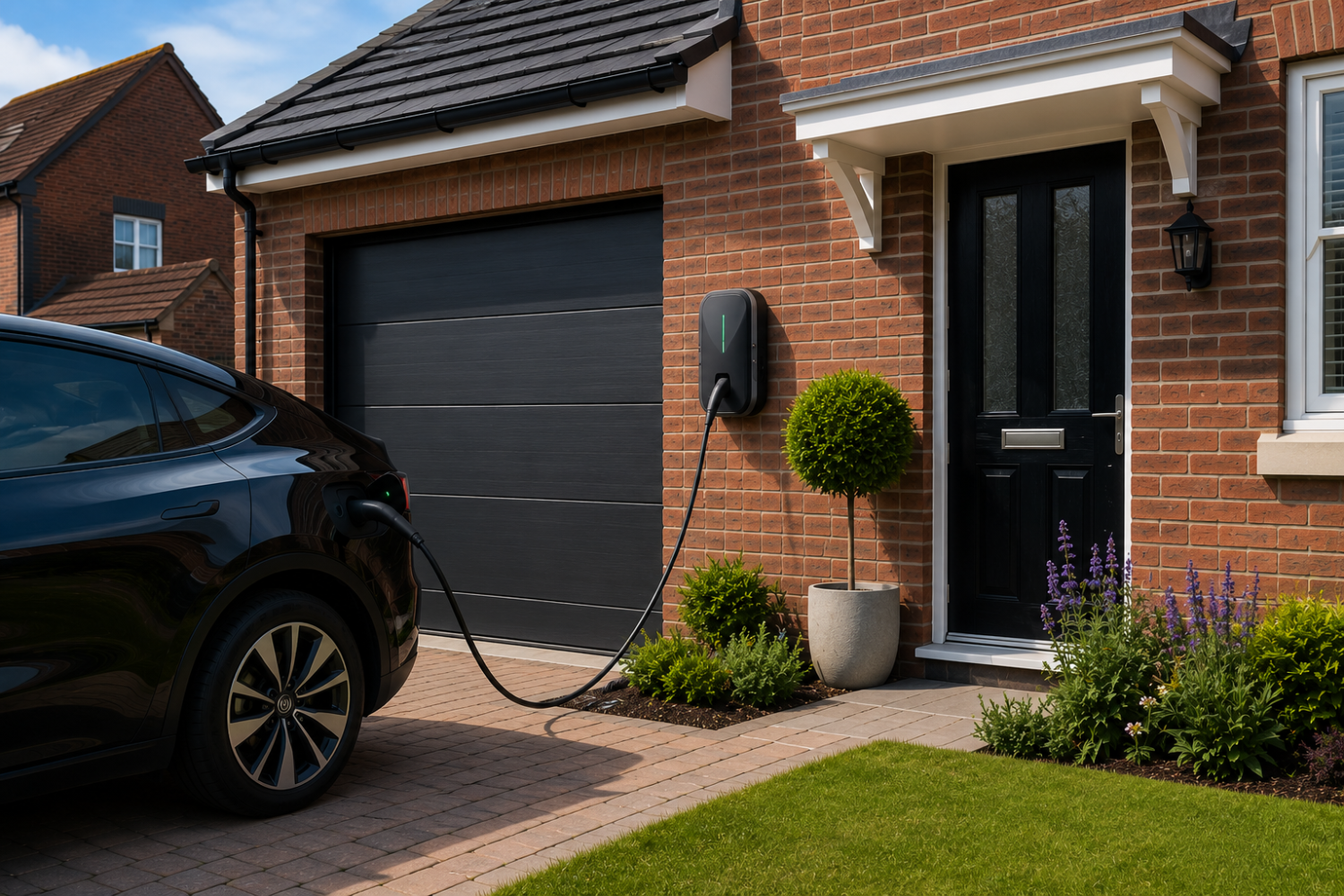
Common locations include a driveway wall, garage, external wall, parking bay, commercial car park or farmyard area. The best location is not always the nearest wall. It depends on where the vehicle parks, how the cable will be used, and how the new circuit can be installed neatly and safely.
For properties in Surrey and West Sussex, the installer may also need to think about outdoor exposure, outbuildings, long cable runs, shared access, listed property constraints, or future plans for more chargers.
A good survey should consider both the electrical design and everyday use. A charger that is technically possible but awkward to use may become frustrating over time.
Will I need a new cable from the consumer unit?
In most cases, an EV charger needs its own dedicated circuit. This usually means a new cable from the consumer unit or distribution board to the charger location.
A dedicated circuit is important because the charger uses a significant amount of power and needs correct protection. It should not normally be connected to a general socket circuit or added casually to existing wiring.
The cable route can affect the cost and disruption. A simple route through a garage may be straightforward. A route across a finished hallway, around a commercial unit or to an outdoor parking area may need more planning.
This is where early advice helps. JPEC Electrical can look at practical cable routes, access points and installation methods before quoting, so you understand what is involved.
What is load management?
Load management helps control how much power the EV charger uses so the property does not exceed a safe demand level. In simple terms, the charger can reduce its output when the rest of the property is using a lot of electricity.
This can be useful if your supply is limited or your property has other high-demand equipment. Instead of upgrading the electrical supply immediately, load management may allow the charger to work safely within the available capacity.
For example, if your home is using an electric shower, oven and heating at the same time, the EV charger may temporarily reduce its charging rate. Once demand drops, charging can increase again.
This can be a sensible option for many homes and small businesses, but it needs to be designed properly. It is not a substitute for checking the installation.
Do I need approval or paperwork for an EV charger?
You may need notification or approval depending on the charger, property and electrical supply. In many cases, the installer handles the required process with the Distribution Network Operator, often called the DNO.
The DNO is the company responsible for the local electricity network. They are not the same as your energy supplier. Their role is to make sure new loads, such as EV chargers, can be connected safely to the local network.
Some installations only need notification after the work. Others may need approval before installation. This can depend on supply size, charger rating, existing demand and whether multiple chargers are being installed.
You should also receive the correct electrical certification after the work is completed. This matters for safety, insurance, future property sales and landlord records.
What about landlords and rental properties?
Landlords should make sure the existing electrical installation is safe before adding an EV charger. If tenants will use the charger, it is important to think about responsibility, access, billing, maintenance and certification.
A rental property in Reigate, Crawley or Redhill may already need an Electrical Installation Condition Report, often called an EICR. An EICR checks the safety of the existing electrical installation. If the report highlights issues, remedial work may be needed before an EV charger is added.
For flats, shared parking or multiple occupancy buildings, the project may be more complicated. Cable routes, permissions, supply capacity and billing arrangements should be considered early.
JPEC Electrical can help landlords understand what is practical and what needs checking before committing to an installation.
What about businesses, farms and commercial sites?
Businesses, farms and commercial sites often need a more detailed assessment because the electrical demand can be higher and less predictable. Workshops, offices, warehouses, industrial units and agricultural buildings may already have machinery, heating, lighting, refrigeration or three-phase equipment.
Three-phase electricity is a type of supply often used in larger commercial, industrial and agricultural settings. It can support higher loads than a typical single-phase home supply, but it still needs proper design and protection.
For a business in Crawley, Horley or West Sussex, the key questions are not just ‘can we fit one charger?’ but whether the installation will support how the site actually operates now and in future.
- How many vehicles may need charging in future?
- Will staff, customers or fleet vehicles use the charger?
- Can charging happen overnight or outside working hours?
- Will the charger affect existing equipment?
- Is the site suitable for future expansion?
Planning this properly can reduce disruption and avoid paying twice for work that could have been designed with future needs in mind.
What can go wrong if the system is not checked properly?
If the electrical system is not checked properly, the charger may be unsafe, unreliable or more expensive to correct later. The most common problems are usually caused by poor planning rather than the charger itself.
Possible issues include nuisance tripping, overloaded circuits, unsuitable consumer units, poor cable routes, missing paperwork, inadequate earthing or unexpected remedial work after installation has already started.
There can also be performance issues. If the charger has to be heavily limited because the supply was not properly assessed, charging may be slower than expected. That may be acceptable for some customers, but it should be explained clearly before work begins.
A careful survey helps identify these issues early, so you can make an informed decision.
What should happen during an EV charger survey?
An EV charger survey should check the existing installation, supply, consumer unit, cable route and charger location. It should also look at how you actually plan to use the charger.
A proper survey may include questions about your vehicle, mileage, parking position, charging times, other electrical loads and future plans such as solar panels, battery storage or electric heating.
The electrician should explain any limitations clearly. For example, your property may be suitable now, suitable with minor upgrades, or suitable only after more significant electrical work.
JPEC Electrical are experienced local electrical and renewable energy specialists. They can assess, design, install, test, commission and advise properly, helping you understand the safety considerations and practical trade-offs before work begins.
JPEC Electrical can help
JPEC Electrical can help you find out whether your electrical system is suitable for an EV charger. Whether you are a homeowner, landlord, business owner, industrial client or agricultural customer in Horley, Reigate, Redhill, Crawley, Surrey or West Sussex, JPEC Electrical can assess your existing installation and explain your options clearly.
A proper EV charger installation is about more than fixing a charger to a wall. It should include checking supply capacity, consumer unit suitability, earthing, cable routes, safety protection, testing, certification and any DNO requirements.
JPEC Electrical can support the whole process from survey and design through to installation, testing, commissioning and aftercare. They can also advise if your EV charger may need to work alongside future upgrades such as solar panels, battery storage or electric heating.
This article is general information only and is not personal advice. Recommendations should always be confirmed through a proper survey, inspection, or system design for the individual property and requirements.